
A cooktop zone heats, then quits
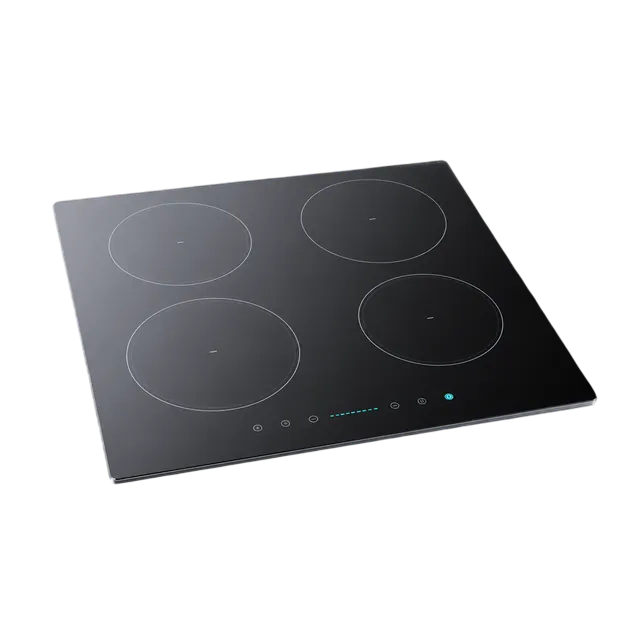
The left zone starts as usual, lets go after a few minutes, cools, and takes the pot again. Radiant glass-ceramic hobs and induction hobs both do this. It is not a moody touch sensor. More often it is a thermal cutout, a terminal pulled when the countertop was replaced, or moisture under the glass.
Before the visit, switch off the breaker for that line and do not turn it on for one more minute to check. Cooktop repair in Tashkent starts from 150,000 som, the exact figure after diagnostics. If the zone never starts and says it cannot see the pot, that is the neighbouring case: the induction cooktop does not see the pot.
The left zone dies after a few minutes
The picture is the same on two different hobs. The zone accepts the pot, or the radiant element glows, it works for a few minutes, and then that zone dies. The neighbours may keep going. Later, once it has cooled, the same zone is alive again, and then it dies again. Heating every other time is this cycle, not a random touch. Left is not special. Any single zone can go this way. The left one is just the one people notice first.
On a radiant hob you can see it. The disc glowed and went dark, even though the finger has left the sensor. On induction there is no glow. The pot stops boiling. The zone may beep, show an overheat mark, or simply go quiet. When you call, say which of the two this is, and whether the heat dies while the keys still answer. A few minutes is not a specification in the manual. Sometimes it is one minute, sometimes ten. The shape matters: heat, cutout, cool-down, heat again.
Do not confirm it with an hour of restarts. Each cycle heats a tired limiter or a loose terminal a little further. One honest observation is enough. If the zone never starts and complains about the pan, this is not that plot. Start with the magnet and the base: the induction cooktop does not see the pot.
A thermal cutout, not the touch panel
Touch glass dies differently. Dead keys, a key that repeats, or a whole panel that ignores a finger. It rarely dies as one zone that honestly heats for a few minutes and then lets go while the neighbouring keys still work. Replacing the glass because a zone switches itself off is a common empty job.
Under the glass of a radiant hob, a thermal limiter sits on the element. It opens when the element or the space under the glass overheats: no ventilation gap, a pot boiled dry, grease baked on from below, a limiter that is simply tired. It cools, it closes, the zone comes back. A new glass does not change that limiter. On induction, a sensor on the coil reads temperature. The sensor drifts, or the coil really overheats because the fan under the hob is dead or the cabinet has no exhaust gap, and the board drops that zone. A thermal fuse in the line can open and stay open. The zone is then dead until the fuse is replaced, and before the replacement we look at why it opened.
The fuse is not bridged with wire, and it is not temporarily shorted. That is how countertops get burned through. It is not an evening jumper. We replace it only together with the cause, with the breaker off. Cooktop repair is where a glass that still listens gets separated from a protector that is already opening. From 150,000 som, the exact figure once the limiter or the sensor has been seen, not from the sentence the sensor is glitching.
A terminal after the countertop was replaced
The hob was fine. The kitchen was rebuilt, the countertop was replaced, and the same week one zone started heating every other time. The cable is short. When the hob goes back into the cutout, a spade or a screw terminal gets pulled, and the conductor sits on half a thread. A cold joint still holds. The terminal heats, resistance climbs, the zone fades, or the insulation turns brown. Often it is the conductor that was tugged, which is why the left zone appears after the fitters leave, not from age.
Do not open the terminal block with the breaker on, and do not tighten screws live. What we need is the sentence: the countertop was changed, and the burnt smell is at the connection, not in the pot. We then look at that connection with the breaker off, before a coil or an element is condemned. A blackened block with a stripped thread is not tighten it and go. The copper is already annealed. That is a replacement of the joint, and we say so.
Sometimes the kitchen pulls the cable sideways and the hob sits in the cutout under tension. The zone then dies not on a neat thermal timer, but when the contact finally lets go: it heats today and drops on the second minute tomorrow. That is still the terminal, not electronics that are getting used to the kitchen. From 150,000 som after the connection has been seen. A coil does not go on the estimate until the terminal is ruled out.
Moisture under the glass
Boiled-over soup, sugar, milk, a wet cloth pushed into the frame. On a radiant hob the moisture sits on the element leads and on the limiter. On induction it sits on the touch film and the connectors: random beeps, a zone that starts and lets go, keys that press themselves. That is no longer a tidy cycle of heated and cooled. It is chaos. A new glass does not cure it blind either.
Sugar is worse than water. It melts into the glass and into the element. Do not scrape a hot sugar spill with a blade. Kill the zone, let the glass cool, then we look. A cold film of soup on top of the glass is a cloth. Moisture under the glass is the frame and the connectors. Do not run the other zones to dry it out. That cooks the board. Breaker off, hob left alone. If after a dry day the symptom is gone and there was exactly one spill, say that. If it keeps coming back, steam is reaching the cabinet under the hob: a missing seal, or a hob sitting in a wet cutout.
One splash, and the zone recovered after a day of rest, is not yet a dead board. Beeping and the same zone dropping every evening after the frame was washed with water poured along it is a reason to leave it off. Cooktop repair opens this with the breaker off. From 150,000 som, the exact figure once it is clear whether the film dried or the connector is already green.
Switch the breaker off before the visit
A radiant hob and an induction hob both sit on mains voltage. Induction glass stays cool and still lies over a live line. Radiant glass stays hot long after you press off. Before we arrive, switch off the breaker that feeds the hob and leave it off. Do not flip it back in case it has passed. If the breakers are not labelled, kill the kitchen group and confirm the hob is dead: no zone answers.
A zone that was just on has to cool before anyone wipes the glass or leans on it. Do not lift the hob out of the cutout yourself. The cable is short, the frame cuts, and a lift with the breaker on is a shock. We lift it, and the breaker is already off. If the breaker trips by itself, leave it tripped. An evening of resets turns a weak terminal into a burnt harness.
This is both constructions, not induction alone. A gas hob is a different conversation and a different supply. Here the subject is electric: a radiant element under the glass, and induction coils. ProServices looks at both at home in Tashkent. From 150,000 som, the exact figure after diagnostics, before the glass, the coil, or the terminal block is replaced. While the breaker is off, nobody tries the hob one more time.
Bottom line
A zone that heats and then lets go points first at a thermal protector, a terminal after the countertop, or moisture under the glass. The touch glass is last in that queue. The fuse is not bridged. The breaker stays off until the visit.
ProServices works on both radiant and induction hobs at home in Tashkent. Cooktop repair starts from 150,000 som, the exact figure after diagnostics. A zone that never starts because of the kazan is next door: the induction cooktop does not see the pot.
Questions
Common questions
01Why does a zone heat for a few minutes and then die?
02Can I bridge the thermal fuse so the zone stops cutting out?
03What should I do before the technician arrives?
04What does this repair cost?
Induction cooktop does not see the pot
A new cooktop after the kitchen was redone, the old kazan from the gas stove, and the zone beeps, flashes a pan symbol, and quits. Induction does not heat the glass. It heats the base. The base has to be magnetic, flat enough, and not smaller than the mark drawn on the glass. A round-bottom kazan often fails two of those three at once. Cookware first, coil second. Cooktop repair in Tashkent starts from 150,000 som, the exact figure after diagnostics. If the zone starts and then dies after a few minutes, that is the other plot: a cooktop zone heats, then quits.
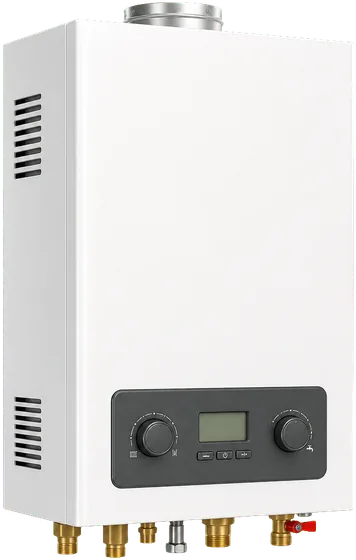
The boiler lights and goes out
A click of ignition, a short tongue of flame in the window, and a few seconds later silence and a lockout. Reset does the same thing again. This is your own gas boiler in a house or in a new flat where it hangs on its own. An ordinary flat on a city riser is not built this way. There is no burner there to reset with a button. The boiler manages to open the gas and to make a spark. Then flame supervision does not confirm that the fire is staying, and the valve closes again. The causes differ: an electrode in soot, little gas at the inlet in the evening, a coaxial pipe pulling its own flue gas back in, or a board that really is not seeing the signal. Which icon lights is the brand's choice. Baxi, Vaillant, and Ariston draw this failure differently. There is no one number for all three. Heating boiler repair starts from 200 000 sum. The exact price comes after diagnostics, once the electrode, the inlet gas, and the flue have been separated. Twenty resets in a row do not heal the board. If you smell gas, do not press reset at all.