
The boiler lights and goes out
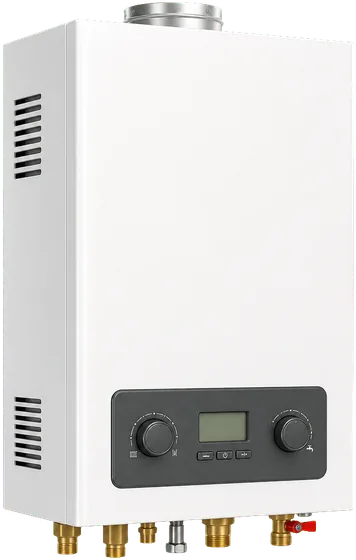
A click of ignition, a short tongue of flame in the window, and a few seconds later silence and a lockout. Reset does the same thing again. This is your own gas boiler in a house or in a new flat where it hangs on its own. An ordinary flat on a city riser is not built this way. There is no burner there to reset with a button.
The boiler manages to open the gas and to make a spark. Then flame supervision does not confirm that the fire is staying, and the valve closes again. The causes differ: an electrode in soot, little gas at the inlet in the evening, a coaxial pipe pulling its own flue gas back in, or a board that really is not seeing the signal. Which icon lights is the brand's choice. Baxi, Vaillant, and Ariston draw this failure differently. There is no one number for all three.
Heating boiler repair starts from 200 000 sum. The exact price comes after diagnostics, once the electrode, the inlet gas, and the flue have been separated. Twenty resets in a row do not heal the board. If you smell gas, do not press reset at all.
A click, a tongue for a few seconds, lockout
You hear a click or the crack of a spark, a short tongue appears in the sight glass, and it dies almost at once. The display locks out. The next reset gives another tongue just like it. There is flame, but it is short: the boiler did not accept it and closed the gas. This is not low pressure in the radiators, and it is not a cold riser in an old flat. The needle can sit in its range and the fire still will not stay. If the needle is at zero, that is a different story, and resets will not raise it.
Look through the window once. Do not make a series of it. A yellow, lazy tongue, or a blue, even one that still dies, are different clues. A lazy tongue is more often gas, or a pipe that is interfering with the air. An even tongue that still vanishes is more often an electrode that does not see it, or the wire to the board. The icon on the screen is one thing on a Baxi, another on a Vaillant, a third on an Ariston, and sometimes only a blinking burner with no letter. We do not paste in a number from someone else's forum. Write the brand, the model, and what is drawn.
While the cause is unclear, do not leave the boiler in endless attempts. Each start is a spark and an opening of the gas valve. After a few lockouts in a row, stop. A smell of gas means: close the gas tap, open a window, do not touch reset. Pressure that has fallen is repaired at the vessel and the leak, not at the electrode. This complaint is about a fire that does not stay.
A dirty flame-sensing electrode
The sensing electrode sits in the flame and picks up a very small current. From that current the board knows the fire is there and holds the gas valve open. Soot, oxide, a white deposit, or a crack in the ceramic makes the current so weak that the board decides there is no flame. The valve closes, even though you still saw the tongue. A bent rod that looks past the flame behaves the same way. The wire from the electrode to the board goes stiff with age and lies as well as a dirty rod.
Filing it bright and bending the gap by eye is not the job. The gap and the position belong to this burner. Too close, and the rod is sooted again within a day. Too far or off to the side, and there is a tongue and no current. The combustion chamber is not where you set a gap from memory of another boiler. On diagnostics we take the electrode out, look at the ceramic for a crack and a track, and put it back in the position this model uses, or replace it if the ceramic has already cracked.
Before it is opened there is not much to see: a tongue in the window that dies, and an electrode body, if you can see it without removing the burner, that is dark and dull. That is enough not to change the board first. The board is at fault when the electrode is clean, the wire is intact, gas is at the burner, and the board still does not accept the signal. Before those three checks, the board has burned is a guess. Work starts from 200 000 sum. The exact price comes when the electrode and the wire are in hand, not from the colour of a tongue on a video.
In the evening there is little gas at the meter
By day the boiler holds a flame. In the evening, when the whole street turns on cookers and heating, there is again a short tongue and a lockout. That is weak gas at the inlet, not a board that is tired by supper. In a private house, and in a new block with a boiler in each flat, pressure at the meter can sag toward evening. The burner lights, the flame is lazy or lifts off the burner, and supervision lets it go. At noon the same boiler heats quietly.
The cooker is a better clue than any code. If the burner ring is also small and yellow in the evening, and normal by day, that is the inlet, not the electrode. If the cooker is even in the evening and only the boiler dies, we look at the filter, the gas valve, and the flue. We do not name a pressure that everyone should have. The meter and the boiler have their own limits. They are measured with a gauge while the burner is trying to run, not by eye from the height of the tongue.
A tap in front of the boiler that is not fully open gives the same evening dropout, once the street demand rises. It is worth checking by hand: the handle along the pipe and fully open, not at an angle. There is no need to take the meter or the joints apart. Soapy water and searching for a leak with a match do not belong here. A smell of gas means close the tap and air the room, not look for bubbles with a flame. On diagnostics we measure inlet pressure while the burner tries to burn. If it sags in the evening, the board and the electrode are not the cause, and there is no point changing them because the street is cooking.
The coaxial flue points the wrong way, and winter condensate
A coaxial pipe takes air from outside through the outer ring and sends flue gas out through the inner one. If the terminal looks into a pocket of wall, under a hood so it will not blow at the window, or too close to a corner, the flue gas is pulled back into the burner air. The flame flares and dies exactly as it does with a dirty electrode. In winter condensate joins in. It freezes in a sag of the pipe or on the terminal, the passage closes, the tongue goes short, and the boiler locks out in the frost, even though it still ran on a thaw in the afternoon.
Which way the slope should run, and how long the pipe may be, is written in this model's manual. We do not hand out a universal always away from the boiler or always toward the boiler. Different flues slope differently, and someone else's advice floods the burner with condensate. On site we look for a sag with water standing in it, for icicles on the terminal, and for an outlet turned toward the side the evening wind blows into the wall. White vapour that is immediately pulled back to the intake grille is recirculation.
Extending the pipe with an extra elbow so the porch stays dry, without checking the length, is not allowed. The extra elbow is the pocket where ice stands in winter. Do not chip the ice while the boiler is still trying to ignite. A fragment falls into the channel. Stop the boiler, let the pipe thaw, then decide whether to move the terminal or remove the homemade elbow. After that the electrode is worth a second look. While the pipe is blocked, a clean electrode still will not hold a flame.
Twenty resets in a row do not heal the board
The reset button only allows one more ignition attempt. It does not wipe the electrode, raise the gas at the meter, or melt the ice in the pipe. Ten and twenty presses in a row heat the ignition transformer and the board output that is already opening the valve for nothing. After a marathon like that the board can die as a second fault, while the first was soot or the flue. So after a few lockouts in a row, leave the boiler off.
The board is changed when measurement shows: the electrode is clean and sits in the flame, the wire is intact, gas is at the burner, and the board still does not see the signal or does not open the valve. Not because the reset button got tired. Baxi, Vaillant, and Ariston are similar here in what they are doing and different in the connectors. We do not fit a board from one onto another, and we do not carry a code from one onto another. A visit needs the icon from your screen, not the same as the neighbour's.
If resets come with a smell of gas, stop the series at once. Close the tap, open the windows, do not light it again. Do not look for a leak with a lighter. For a visit in Tashkent the brand is enough, plus that the tongue is short and dies, whether it happens only in the evening, and whether there is ice on the coaxial flue. Heating boiler repair starts from 200 000 sum. The exact price comes after diagnostics. Until the electrode, the gas, and the pipe have been checked, the board does not go into the estimate.
Bottom line
A short tongue and a lockout mean the boiler saw a spark and did not hold the flame. An electrode in soot, weak gas toward evening, and a coaxial flue that swallows its own smoke or has iced up, put the same picture in the window. The icon on the display still belongs to each brand.
After a few resets, stop the boiler. A smell of gas means close the tap and air the room, not press reset again. Heating boiler repair starts from 200 000 sum. The exact price comes after diagnostics. Baxi, Vaillant, and Ariston here are brands we see, not a table of shared codes.
Questions
Common questions
01The flame lasts a couple of seconds and dies. Is that radiator pressure?
02Can I clean the electrode with a file?
03It heats by day and dies in the evening. Change the board?
04How many times can I press reset?
The boiler lost pressure
In the morning the radiators are cold and the gauge needle is on zero. This is the circuit of your own boiler: a private house, or a newer flat where the boiler hangs in the kitchen, the plant room, or on the balcony. An ordinary Soviet-plan flat on city risers is not this case. There is no such gauge there, and a cold riser is a building question, not a valve on a Baxi. The sealed circuit lost water overnight, or it gave water away through the relief valve as it cooled. At zero many boilers will not fire, the pump churns air, and the radiators stay cold. What pressure is normal is printed on this gauge and in the manual of this model. There is no single number for every house. Storeys and vessels differ. Heating boiler repair in Tashkent starts from 200 000 sum. The exact price comes after diagnostics. We see Baxi, Vaillant, and Ariston often, and each brand draws the icon its own way. A code from someone else's forum does not belong on your needle. Topping up every morning is not the cure.

Sound but no picture: what to check before opening the set
The news is talking, the remote changes channels, and the screen stays black. That is not a picture mode that slipped. Sound lives on the main board. Light and the image itself are further down the chain. Until it is clear where the chain broke, do not take the set apart at home, and do not leave it running if it smells of burning. From the outside there is one useful check: a flashlight close to the glass. The cover stays on. Opening the set while the plug is in the wall is not allowed. The power supply holds a charge even after the plug is out. TV repair starts from 150,000 sum. The exact price comes after diagnostics. Backlight, its supply, and a black screen that shows nothing even under a flashlight are different jobs.