
Induction cooktop does not see the pot
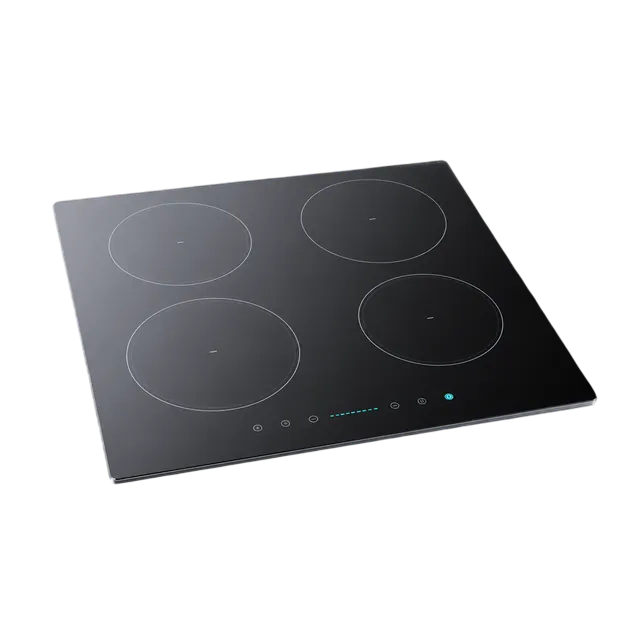
A new cooktop after the kitchen was redone, the old kazan from the gas stove, and the zone beeps, flashes a pan symbol, and quits. Induction does not heat the glass. It heats the base. The base has to be magnetic, flat enough, and not smaller than the mark drawn on the glass. A round-bottom kazan often fails two of those three at once.
Cookware first, coil second. Cooktop repair in Tashkent starts from 150,000 som, the exact figure after diagnostics. If the zone starts and then dies after a few minutes, that is the other plot: a cooktop zone heats, then quits.
A new cooktop and an old kazan
An induction zone does not heat the air above the glass. The coil under the glass makes a field, and the metal base takes that field. No magnetic metal of enough area, and the zone beeps and says there is no pan. A kazan that lived on gas for years is often a stranger to the new top. Either it is aluminium or copper, or it is cast iron with a round bottom.
Cast iron usually holds a magnet. A round bottom on flat glass touches a small patch or a ring, not the whole printed mark. The sensor wants a minimum area, not the general idea of iron. The zone ticks and lets go, or it heats a tiny spot that will never boil a kazan. That is not a defective cooktop, as long as the same zone accepts a flat steel pan that covers the printed circle.
An aluminium or copper kazan will not hold a magnet, and induction will not see it. Flat-bottom kazans made for induction exist. That is a cookware change, not a repair of the old round one. We do not leave a steel adapter disk under the kazan as a permanent fix. Many boards reject the disk anyway, and the disk overheats the glass. The check on site is short. Same zone, an enamelled or cast-iron pan with a flat base the size of the mark. If the zone takes it, the cooktop sees cookware and the kazan is the mismatch. If it does not, we continue through this article instead of shopping for a second kazan.
A fridge magnet as the test
Use an ordinary magnet from the fridge door, not a tiny souvenir. Put it on the outside of the base, at the centre, not on the wall of the pot. If it holds and does not slide off, the base is ferromagnetic. If it slides or falls, the pot is aluminium, copper, glass, or non-magnetic stainless. Induction will not run that pot, however you shuffle it around the zone.
Some stainless pots have a steel disk pressed into the base. The magnet sticks at the centre and not on the wall. That can be fine for induction if the disk is large enough and sits flat. A magnet that holds on a round kazan is still not permission to cook. The magnet answers the material. The shape of the base answers the contact area. Both are required.
Do not scrape enamel with the magnet, and do not bring a huge speaker magnet off the fridge. A normal rubber magnet is enough. If the magnet holds on a flat base and the zone still rejects that pot, the metal is innocent. Then look at the zone size and at whether the base is domed. A base that spent years in a gas flame is often humped. It rocks on the glass, and the gap kills the coupling even with a live magnet. Sight along the base against a straight edge, or look for light under the rim when it sits on the glass.
The zone is smaller than the base
The circle on the glass is the coil, not decoration. A large pot on a small circle heats in the centre. The rim lags and feels cold. That is where the sentence the cooktop does not see the pot comes from. The handles stay quiet and the boil is only in the middle. The pot was seen. The coil is simply smaller than the base. A wide pot needs a zone closer to the size of the base, or an acceptance that the rim will catch up later through the metal itself.
The opposite mistake is just as common, and people mix the two. The base is below the minimum for that zone: a cezve, a saucepan, a small milk pot. The zone refuses to start. The minimum is in the manual and often as a second circle on the glass. It is not the same for the front zone and the back zone. Banging the pot on the glass to wake the sensor does nothing. It is not a button. Some cooktops have a small zone, or a bridge, for small pans. Use that, not the large circle.
A warped base sits in both stories. The diameter looks enough, the magnet holds, and there is a gap between base and glass. The field weakens across the gap. The zone drops the pot or heats in patches. Do not grind that pot flat by the weight of a kazan. That is how the glass gets cracked. If a flat heavy pan of the right diameter is silent on this zone and heats on the next one, the size of the base is no longer the question.
The lock, and a crack in the glass
A key or a padlock on the display is the child lock. While it is lit, the zones will not start, however correct the pot is. It comes off by holding the lock key, often together with power, for a few seconds. How many seconds is drawn on this panel. There is no single number for every model. If the lock icon is lit, the coil is not condemned.
A crack is a stop. A crack cuts the touch film, so a zone or the whole top stops listening, and it lets a spill through to the power side. Tape and careful cooking end in a tripped breaker, a shock, or a board full of soup. Do not set a kazan on cracked glass. If the crack appeared after a dropped pot or a boil-over, switch off the breaker for that line and do not turn it back on to see if the top is still alive. A scratch is not a crack. A crack catches a nail or runs as a line. If you are unsure, leave that zone unused and show it as it is.
Glass is not replaced together with the coil, and not from a photo of a reflection. People read a reflection on new glass as a crack. A fingernail and a damp cloth separate a scratch from a chip. Cooktop repair for the glass and for the coil are different jobs. From 150,000 som, the exact figure once it is clear whether this is a crack or a sensor that is only locked.
When it is the coil, not the cookware
The coil is not guilty because the kazan is round. It is guilty when the magnet holds on the base, the base is flat, the diameter covers the mark, the same pot is accepted on the other zones, and this zone still shows a pan error, clicks, and lets go. The cookware is crossed off.
What remains is under the glass, not on the counter: an open coil, the temperature sensor on that coil, the pan-detection circuit, or the power switch for that zone. After a spill the connector is sometimes the fault, not the copper of the coil. Do not lift the glass yourself. It is clipped or glued, there is mains voltage under it, the frame cuts hands, and the ribbon is short. That opening is done with the breaker off, on the visit, not as an evening look to see if a wire cooked.
One dead zone with the others alive is usually that coil or its power stage, not the whole electronics and not the family kazan. We name the price after that check, before a replacement. From 150,000 som. If the zone instead starts and then quits by itself after a few minutes, the cookware is innocent in a different way: a cooktop zone heats, then quits.
Bottom line
Induction stays quiet on a round kazan, on aluminium, and on a base smaller than the mark. A magnet, a flat pan of the right size, and the lock icon separate cookware from the coil in one check. A crack is not taped over and cooked on.
ProServices looks at the cooktop at home in Tashkent. Cooktop repair starts from 150,000 som, the exact figure after diagnostics. A zone that heats and then lets go is a separate case: a cooktop zone heats, then quits.
Questions
Common questions
01Why does a new induction cooktop reject the old kazan?
02How does the magnet test work?
03Can I keep cooking if the glass is cracked?
04What does it cost if a zone will not see the pot?
A cooktop zone heats, then quits
The left zone starts as usual, lets go after a few minutes, cools, and takes the pot again. Radiant glass-ceramic hobs and induction hobs both do this. It is not a moody touch sensor. More often it is a thermal cutout, a terminal pulled when the countertop was replaced, or moisture under the glass. Before the visit, switch off the breaker for that line and do not turn it on for one more minute to check. Cooktop repair in Tashkent starts from 150,000 som, the exact figure after diagnostics. If the zone never starts and says it cannot see the pot, that is the neighbouring case: the induction cooktop does not see the pot.
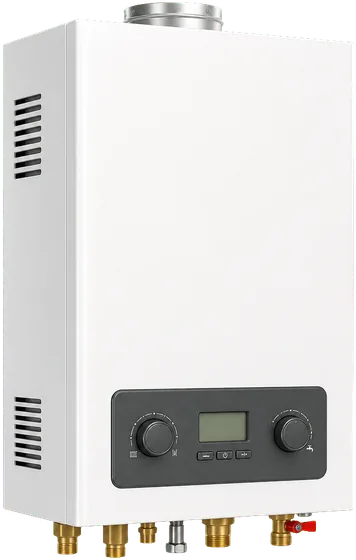
The boiler lights and goes out
A click of ignition, a short tongue of flame in the window, and a few seconds later silence and a lockout. Reset does the same thing again. This is your own gas boiler in a house or in a new flat where it hangs on its own. An ordinary flat on a city riser is not built this way. There is no burner there to reset with a button. The boiler manages to open the gas and to make a spark. Then flame supervision does not confirm that the fire is staying, and the valve closes again. The causes differ: an electrode in soot, little gas at the inlet in the evening, a coaxial pipe pulling its own flue gas back in, or a board that really is not seeing the signal. Which icon lights is the brand's choice. Baxi, Vaillant, and Ariston draw this failure differently. There is no one number for all three. Heating boiler repair starts from 200 000 sum. The exact price comes after diagnostics, once the electrode, the inlet gas, and the flue have been separated. Twenty resets in a row do not heal the board. If you smell gas, do not press reset at all.