
Vacuum sealer will not seal the bag
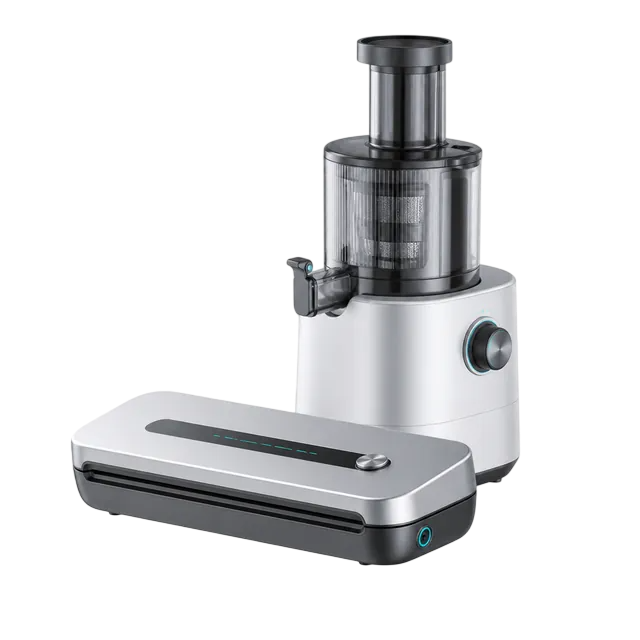
The meat bag was tight in the evening. By morning the seam had let go and the piece sat in frost. That is a weak weld, not a freezer that opened the bag by itself. Home sealers are built in two ways, and the layout decides what we check on a visit.
An external sealer leaves the bag outside. The pump pulls air along the textured channel in the open end, then a heating strip welds the two walls. A chamber sealer puts the whole bag in a box, pulls air out of the chamber, and only then fires the strip. A wet lip, crumbs, and a worn Teflon cover spoil both, but juice and fat hurt the external machine more.
Vacuum sealer and juicer repair in Tashkent starts from 100 000 sum. The exact price comes after diagnostics, before we change the strip, the pump, or the lid seal.
The meat bag was open by morning
In the evening the piece sat in a tight bag. In the morning the lip had opened along its length, the meat was frosted, and the seam showed a white foam line. The freezer did not do that. The two walls never became one strip of polyethylene. They only tacked. Cold shrinks the film and makes it stiffer, the weight of the meat pulls the edge, and a tack lets go. A clear, even seam that you cannot peel apart with your fingers stays closed in the freezer.
White foam, strings of melt, and a seam that opens like a zipper mean the weld zone was wet, greasy, or heated unevenly. An external sealer pulls air from the bag mouth, so meat juice rides straight onto the hot bar. A chamber machine pulls air from around the bag, so liquid is less eager to run to the seam, but a wet lip still will not weld. Overnight it looks as if the bag opened itself.
Meat that has sat open should not go back into the same damaged mouth. The surface has dried, and the film in the weld zone is thin and pinholed. Cut the edge off, dry a fresh neck, and pack again if the food is still good. If every second bag opens, it is no longer about one piece of meat. On diagnostics we look at the bar, the tape, lid pressure, and whether the pump actually reaches vacuum before the weld starts.
The Teflon strip is worn through
A narrow Teflon strip lies over the heating wire. The strip does not make the heat. It keeps molten film off the metal and spreads the heat a little across the seam. While the tape is intact, the seam is narrow and the bag leaves the bar on its own. When the tape is worn, browned, or blistered, the film welds to the wire. The bag shows holes, black dots, and a torn edge. The bar collects burnt plastic.
Each later pack is worse than the one before. Burnt residue heats in spots: one point burns through, the next only tacks. A smell of burnt plastic on a short seal is the usual trace of a bare or fouled wire. Sticky tape, foil, and baking paper are not a substitute. They melt into the seam or they fail to insulate the wire, and the next bag welds to that homemade layer.
We change the strip when it is dull, torn, or when film still sticks to it after cooling. We check the wire at the same time. If it is stretched, darkened in patches, or the bar housing is melted, a new sticker alone will not hold. On an external sealer the tape is under the lid, in plain sight. On a chamber sealer it is inside, on the seal bar, and we reach it after the retainer comes off. Labor and the part are priced after that look, not from a photo of one bag.
Crumbs and a wet bag edge
A weld is two clean layers of film pressed against a hot bar. A spice crumb, a grain of salt, a smear of fat, or a drop of juice leaves a tunnel. In the evening the bag seems closed because the film stuck around the debris. By morning air, and then frost, finds that gap. The seam shows a dent, a bubble, or a dark spot right there.
A wet lip is worse. Water on the bar flashes to steam, the steam blows the seam open from inside, and you get white foam instead of a clear line. An external machine pulls liquid toward the bar if a bag of marinade or fresh meat lies flat. A chamber machine is calmer with liquid, but the lip still has to be dry before the bar fires. Dry the weld zone, not the outside of the whole bag. For juicy food leave a long dry neck and seal above the juice line, not through a puddle.
The textured bag used on an external sealer carries air along its pattern. A smooth grocery bag often will not vacuum on that machine: the pump has no path, so the unit either will not start or it tries to heat a bag that is still full of air. A chamber sealer is fine with smooth film, because the air leaves the box rather than traveling through the bag wall. If the seam is still foamy after a dry lip and the right bag, we go back to the tape and to whether the lid presses the bar along its full length.
Air out first, then the seam
A sound cycle has one order. The pump takes the air first. The bag slumps and stops springing back. Then the bar heats the lip that is already pressed flat. If a seam appears while the bag is still soft and thick, the weld went through a bag full of air. Meat in that pack dries out in the freezer almost as if it had no bag. That fault is separate from a seam that opens later. Here the weld can even be strong. There was simply no vacuum.
On an external sealer the air path is the channel in the lid plus the pattern in the bag. A crumpled lip, a bag that missed the slot, a torn channel gasket, a weak pump, or smooth film instead of textured film will block it. The pump can hum and still pull almost nothing: the diaphragm is worn or a valve does not hold. A chamber sealer shows a different picture. The lid has to sit on its own gasket. If that gasket is cracked or a crumb is under it, the vacuum indicator never reaches the working point, yet the bar may still fire on a timer.
Diagnostics splits this into two questions. Did the bag go tight before the weld click, or was the seam made on a soft bag? And does that seam hold if you pull the walls apart? The answers point either to the pump and the seal, or to the bar, the tape, and a dirty lip. There is no point changing every part at once. The exact price is named when the failed part is in sight. The service starts from 100 000 sum, not from a guessed parts list.
The button is held longer than it should be
On many home units the seam is a short pulse, not a heat-until-it-looks-safe cycle. The wire is already hot. Extra seconds do not make a thicker weld. They cut a narrow groove through the film. From the outside the groove looks like a good seam. Hold it to the light and you see pinholes. Those holes are how the bag takes air back by morning. The Teflon strip suffers next. It scorches, and the following bag sticks because of the tape.
A long press usually starts from another fault. The first pulse did not take because the lip was wet or the tape was dead, so the button is held again. A second pass on the same line almost always holes the bag. If the machine has separate vacuum and seal buttons, press seal after the bag has collapsed, and release it when the bar has finished its pulse, not when you smell plastic. If the cycle is automatic, an extra manual press does not make it stronger.
The lid still has to latch. A half-open lid heats the lip and does not press it, so the line only shines. Leaning on the housing is not a repair. Loose hinges and a weak latch are adjusted or the stop is replaced. They are not fixed by hand weight. If a dry lip, an intact tape, and a normal short pulse still will not hold a seam, bring the unit in or call for a visit. On site we check the bar, the pump, and the clamp. A juicer that vibrates hard is a different machine: different noise, different leak, different parts.
Bottom line
If a bag opens in the freezer, first separate a foamy seam from a bag that never went tight. A dry clean lip, an intact Teflon strip, and a short pulse after vacuum is a normal cycle. A burnt tape, juice on the lip, and a longer press make a holed line that lets the meat go overnight.
For a visit in Tashkent we need the model, whether it is an external or a chamber sealer, and whether the bag was tight before the seam. Vacuum sealer and juicer repair starts from 100 000 sum. The exact price comes after diagnostics. Until the bar and the pump have been seen, we do not quote a part.
Questions
Common questions
01Why does the bag open in the freezer and not on the counter?
02Can I seal a plain smooth bag?
03Can sticky tape replace the Teflon strip?
04There is a seam but the bag is soft. Is the bar at fault?
Juicer vibrates hard
Juice is suddenly on the cabinet doors, and the machine itself is crawling toward the edge of the table. That is a centrifugal basket spinning off center, or an auger hitting a cracked strainer. They are different machines, and tightening a few screws rarely fixes either one. A centrifugal juicer throws juice at high speed. Spray from the lid, a clogged pulp outlet, and a basket that missed the drive clutch give both the puddle on the cabinet and the walk across the table. A masticating juicer should run slowly and quietly. If it shakes the table, the auger is catching the strainer: a crack, a pit, or a broken fin. Its leak is usually down into the motor, not a fan of juice across the kitchen. Vacuum sealer and juicer repair in Tashkent starts from 100 000 sum. The exact price comes after diagnostics, once we can see whether the basket, the mesh, the clutch, or the jug is at fault. Frozen chunks do not go down the throat of either machine.
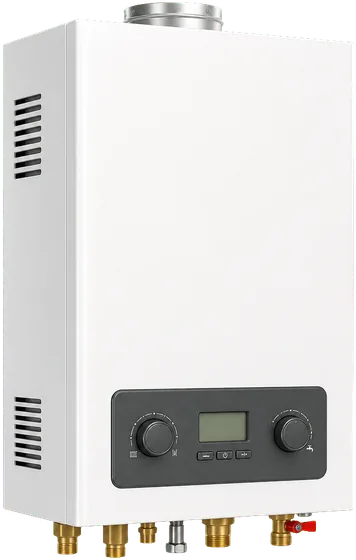
The boiler lights and goes out
A click of ignition, a short tongue of flame in the window, and a few seconds later silence and a lockout. Reset does the same thing again. This is your own gas boiler in a house or in a new flat where it hangs on its own. An ordinary flat on a city riser is not built this way. There is no burner there to reset with a button. The boiler manages to open the gas and to make a spark. Then flame supervision does not confirm that the fire is staying, and the valve closes again. The causes differ: an electrode in soot, little gas at the inlet in the evening, a coaxial pipe pulling its own flue gas back in, or a board that really is not seeing the signal. Which icon lights is the brand's choice. Baxi, Vaillant, and Ariston draw this failure differently. There is no one number for all three. Heating boiler repair starts from 200 000 sum. The exact price comes after diagnostics, once the electrode, the inlet gas, and the flue have been separated. Twenty resets in a row do not heal the board. If you smell gas, do not press reset at all.