
Juicer vibrates hard
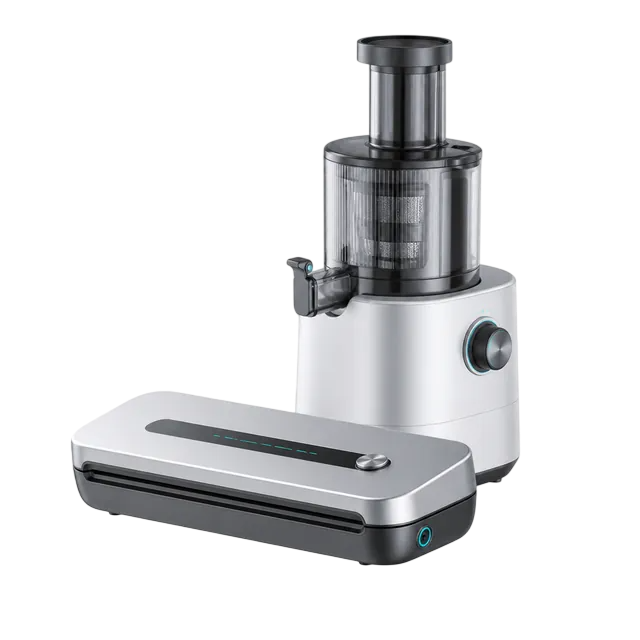
Juice is suddenly on the cabinet doors, and the machine itself is crawling toward the edge of the table. That is a centrifugal basket spinning off center, or an auger hitting a cracked strainer. They are different machines, and tightening a few screws rarely fixes either one.
A centrifugal juicer throws juice at high speed. Spray from the lid, a clogged pulp outlet, and a basket that missed the drive clutch give both the puddle on the cabinet and the walk across the table. A masticating juicer should run slowly and quietly. If it shakes the table, the auger is catching the strainer: a crack, a pit, or a broken fin. Its leak is usually down into the motor, not a fan of juice across the kitchen.
Vacuum sealer and juicer repair in Tashkent starts from 100 000 sum. The exact price comes after diagnostics, once we can see whether the basket, the mesh, the clutch, or the jug is at fault. Frozen chunks do not go down the throat of either machine.
Carrot juice on the cabinet front
The carrot is still in the throat, and an orange stripe is already on the cabinet handle. A centrifugal basket does not leak like a tap. It throws juice. The stream should go into the spout and the jug. If the lid never reached the latch, the gap around the rim becomes a nozzle: drops fly sideways, straight into the doors. The same thing happens when the pulp bin is packed full and the juice has nowhere to go but up, under the lid.
Switch off, take it apart, check the seating. The jug spout has to sit in its mate, not beside it. The gasket under the bowl is in place and not pinched. Pulp is emptied, mesh holes are not glued shut with fiber. Then a short run with an empty basket: there should be no spray at all. If a dry machine still spits from the same spot, either the jug is cracked or the lid is warped and no longer presses the rim.
Wiping the doors and pressing on is how the cabinet hinges and the socket behind the counter get soaked. Juice is sticky. It dries in the lid gap and holds the lid even worse next time. On a visit a photo of the actual trail helps: a fan across the door, a puddle only under the spout, or drops at the back of the housing. Those are three different points. A sealer that will not weld the bag has nothing to do with this. It has no basket and no speed like this.
The basket that walks across the table
The machine should not travel. If the housing sets off across the counter, the basket is not spinning around its own center. Pulp has stuck on one side, the mesh is dented, or the basket missed the clutch dogs and is wobbling. On a wet, smooth counter, worn feet only make that worse. Do not hold the housing with your hands while it finishes the carrot. At speed the basket is heavy, and if it leaves the clutch, a palm will not stop it.
Stop it with the switch and unplug it. Wait until the basket coasts down on its own. Then lift it off and look at the bottom. The drive dogs should be intact, not worn into smooth bumps. The slots in the basket should be free of cracks. The mesh should be round: set the basket on the table and it should not rock on a dent. A lump of fiber on one wall comes off with the brush. Feet that have worn down to plastic can be replaced, but new feet do not straighten a bent basket.
After assembly, run it empty again, on a dry, level table. A light hum is normal. A walk toward the edge, a knock once per turn, and juice that looks milky with grey pulp are not. Grey pulp often means the mesh is already rubbing the plastic or the lid. That is a stop, not one more carrot in the hope that it evens out. We price the clutch and the basket from the wear we see. Service work starts from 100 000 sum, not from a guessed parts total.
A dull mesh and a cracked jug
A dull mesh in a kitchen usually means one of two things. Either the holes are packed with fiber, juice cannot pass, the basket gets heavy on one side and starts to knock. Or the teeth on the basket floor are worn, carrot is mashed instead of cut, the pieces stay large, and the imbalance is the same. Do not scrape the mesh with a knife. A knife folds the rims of the holes, and the next carrot clogs them even faster. Brush and water. Teeth that are already smooth will not grow back from brushing. That basket is a replacement if it knocks.
A crack in the jug or the bowl looks like a leak from nowhere. The counter is dry while the machine sits. At speed the juice finds the crack and paints a stripe on the cabinet or drips into the counter seam. A crack in the basket itself is worse than a crack in the jug. The basket is the part that spins. Cracked plastic at speed can come apart. It will not just work a little longer. A mesh with a knife hole stays out of service too: the hole puts pulp in the juice and leaves a heavy lump of fiber.
A dented mesh sometimes shows against the light. The dent catches light differently from an even field of holes. Do not hammer a small dent flat. The basket becomes oval and walks the table even more confidently. If the jug is cracked but the basket is whole and seated on the clutch, replacing the jug can take the spray with it. If the knock remains, the basket or the drive dogs are at fault, not the juice jug.
Centrifugal and auger machines leak differently
A centrifugal juicer dirties the kitchen in a fan. High speed, lid, spout, pulp bin. Juice on the cabinet, on the backsplash, sometimes on the ceiling of a narrow kitchen if the lid gap points upward. Its shake comes from a basket out of balance. A masticating juicer, the slow cold-press type, turns slowly. It should not shake the table. Juice leaves in a calm stream into the tray. If that machine suddenly vibrates like a centrifuge, the auger is jammed against something: a cracked strainer, a pit inside, or a broken auger fin.
The leaks differ too. On a centrifugal machine we look for spray at the lid joint and a puddle at the spout. On an auger machine the wet spot is often under the housing, at the center: the shaft seal lets juice down into the motor. That is not a cabinet door. That is a risk to the winding. Do not run it to finish the last of the fruit. You get a sweet puddle underneath and a hot smell if juice has reached the brushes or the board. A cracked auger strainer gives the knock, the pulp, and that leak together.
The parts are not shared. A Bosch or Philips basket will not fit a Hurom or Kuvings auger juicer, or the other way around. On a visit we name the type first: a centrifugal unit with a wide throat and a separate basket, or an auger unit with a narrow throat and a screw inside. The type decides what we bring. We do not price the words leaks and shakes. After it is open we can see whether it is the strainer, the clutch, the jug, or the shaft seal. One figure to start from: work from 100 000 sum, exact total after diagnostics.
Do not ram frozen food down the throat
Frozen strawberries, ice, and carrots straight from the freezer do not belong in the throat. The chunk is harder than both the plastic grater and the auger. A centrifugal machine takes the hit on the basket: a dent, a cracked mesh, the basket leaves the clutch, and the unit walks the table. An auger machine locks. You hear a blow, then either silence or a motor howling because it cannot turn the ice. The strainer often has a long crack afterward, even when the outer housing looks whole.
Use only the pusher that came with it. A knife, fork, or spoon reaches the mesh before it reaches the fruit. The hole later looks as if the mesh wore through by itself. Cut a large carrot lengthwise so it passes the throat without a slap of the palm. Take peach and apricot pits out before you start, not after the knock. Soft fiber, celery, and too much green clog the holes. The motor starts to hunt, the speed wanders, and that gets mistaken for a broken basket. After a load like that, wash the mesh at once. Do not let it dry into a crust.
If the machine already walks, or juice is dripping from underneath, after a frozen chunk, another start will not straighten it. Open it, look for a crack in the mesh, for drive dogs worn smooth, and on an auger unit look at the bottom of the shaft as well. That is a visit, not a trick of running a banana through because it is soft and will clean the crack. The banana packs pulp into the crack, the knock goes quiet for a minute, and it comes back with juice in the motor.
Bottom line
Juice on the cabinet, a walk across the table, and a knock once per turn mean stop, not one more glass. On a centrifugal juicer we check the lid, the pulp, how the basket sits, and whether the jug is cracked. On an auger juicer we check the strainer, the screw fins, and a leak downward into the motor. Frozen food stays out of the throat before the repair and after it.
For a visit in Tashkent the type of machine is enough, plus whether it sprays the cabinet or drips from below. Vacuum sealer and juicer repair starts from 100 000 sum. The exact price comes after diagnostics. Until the basket or the auger is in hand, we do not name a part price.
Questions
Common questions
01Why does juice hit the cabinet instead of the jug?
02Can I hold the machine if it walks?
03Can the mesh be cleaned with a knife?
04Is an auger juicer allowed to shake the table?
Vacuum sealer will not seal the bag
The meat bag was tight in the evening. By morning the seam had let go and the piece sat in frost. That is a weak weld, not a freezer that opened the bag by itself. Home sealers are built in two ways, and the layout decides what we check on a visit. An external sealer leaves the bag outside. The pump pulls air along the textured channel in the open end, then a heating strip welds the two walls. A chamber sealer puts the whole bag in a box, pulls air out of the chamber, and only then fires the strip. A wet lip, crumbs, and a worn Teflon cover spoil both, but juice and fat hurt the external machine more. Vacuum sealer and juicer repair in Tashkent starts from 100 000 sum. The exact price comes after diagnostics, before we change the strip, the pump, or the lid seal.
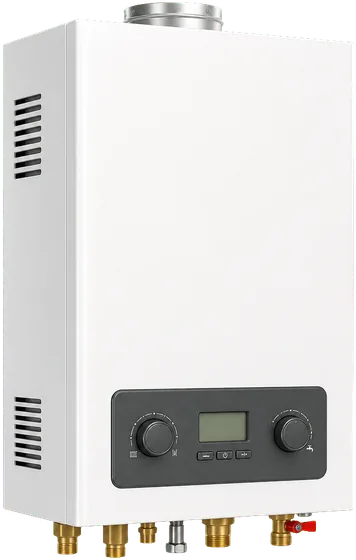
The boiler lights and goes out
A click of ignition, a short tongue of flame in the window, and a few seconds later silence and a lockout. Reset does the same thing again. This is your own gas boiler in a house or in a new flat where it hangs on its own. An ordinary flat on a city riser is not built this way. There is no burner there to reset with a button. The boiler manages to open the gas and to make a spark. Then flame supervision does not confirm that the fire is staying, and the valve closes again. The causes differ: an electrode in soot, little gas at the inlet in the evening, a coaxial pipe pulling its own flue gas back in, or a board that really is not seeing the signal. Which icon lights is the brand's choice. Baxi, Vaillant, and Ariston draw this failure differently. There is no one number for all three. Heating boiler repair starts from 200 000 sum. The exact price comes after diagnostics, once the electrode, the inlet gas, and the flue have been separated. Twenty resets in a row do not heal the board. If you smell gas, do not press reset at all.