
Knocking on the spin cycle
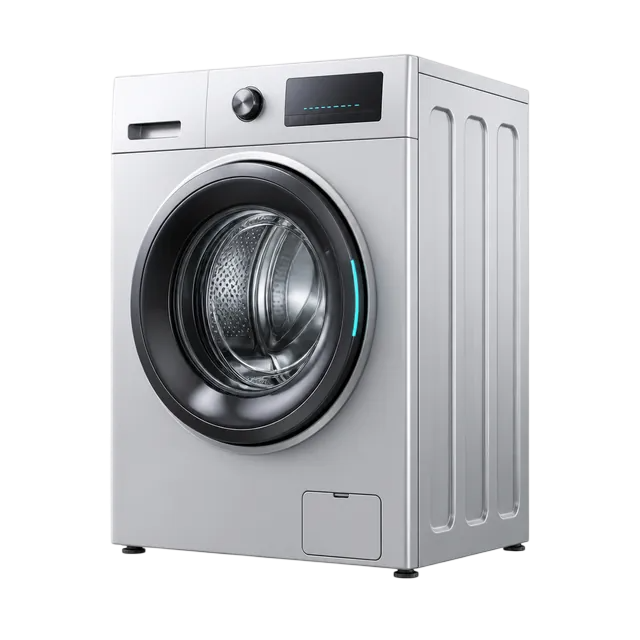
On spin, a washer can drone like a distant aircraft, or it can hit the cabinet once every turn. Those are different bills and different parts. A hum that grows with speed usually leads to the bearings and the seal. A knock that lands in the same place each turn is a coin, a wire, or a button between the drum and the tub. A blow at the start of the ramp, when the machine walks, is the dampers, and a bare concrete floor makes it sound meaner than it is.
Until the play has been checked by hand, leave high spin off: the drum hits the tub and the heater. If the machine also kept its water that same day, deal with the drain before the bearings: a washer that will not drain. After that it is washing machine repair, and the sum depends on the tank.
A rising drone and a once-a-turn knock are different bills
The aircraft drone on spin usually starts quietly and thickens toward high speed. An empty drum, turned by hand, growls evenly, without a separate hit. That is a bearing, often together with the seal: a rusty or dark trace shows under the tub while the wash still finishes. It is not "a noisy machine in general". Hard water does not eat a bearing. Water that has passed a tired seal does.
A knock is different. One hit per revolution, clearest at low speed, is almost always an object between the drum and the tub: a coin, a bra wire, a button. It does not swell smoothly. It clicks at one point when you turn the drum slowly by hand. Dust in the niche has nothing to do with it. An evening voltage sag does not knock either. The drum simply never reaches speed and the motor hums, while by hand it turns freely and without play.
I do not fold these sounds into one price on the phone. Bearings with the tank opened, a pair of dampers, and a coin lifted out with a hook are three jobs. The work starts from 150 000 sum. The exact sum is after diagnostics, when it is clear what is ringing and what the tank is made of.
What the drum tells you before the tank is opened
The tank is not opened just to listen. The clothes come out first. If the door is locked and there is still water inside, do not pry it. Drain first, with the machine upright. An empty, open machine can be listened to with the plug pulled. Turn the drum by hand through a full revolution, slowly. A bearing growls all the way around. A coin or a wire clicks in one place. Metal scraping plastic means you stop. You do not listen to that again on a spin.
Play is not the same as the springs. The springs rock the whole tub, drum included, softly. Bearing play is different: one hand holds the tub, the other moves the drum up and down. The inner drum answers with a short dull knock, and the tub hardly moves. A little travel of the whole assembly on the suspension is normal. Do not hammer that gap with a spin "to confirm". At speed the shaft only opens the seat further.
A short spin with no clothes is allowed only when there is no play, nothing scrapes by hand, and the water is gone. I listen to the start of the ramp and the top speed separately. A hit in the first second and quiet after that is not a bearing. An even hum that arrives mid-spin and stays is. If there is play, I do not start that test spin.
Dead dampers sound worse on bare concrete
The dampers hold the tub from below and kill the ramp. When they are tired, the drum hits the cabinet once or twice at the start of spin, the machine shifts, and then it sometimes catches speed and runs quieter. On the bare concrete floor of a Tashkent flat that hit sounds like a hammer on the slab. A mat changes how the floor rings. It does not replace a dead damper.
The check needs no teardown. Plug out, tub empty. Push the drum down from the top and let go. A live damper returns it and stops it. A tired one gives several bounces. If the tub stays down, I look at the springs as well: a broken spring and a leaking damper are not one part. A new machine that walks from the first day is worth checking for shipping bolts left in. A machine that washed quietly for years is no longer explained by bolts.
Dust in the niche and July heat do not melt a damper in one wash. Heat makes the cabinet plastic ring more, so the hit sounds more expensive than it is. I do not replace a tank because of one bang at the start of spin on concrete. Hands on the drum first: play, or no play.
A sealed plastic tank is where the price jumps
The bearing sits in the rear of the tank. If the tank is metal and bolted, it comes apart on the bench, the bearings and the seal are replaced, and it goes back together. If the tank is plastic and welded, there is no separate "small bearing" job. The seam is cut, the bearing is pressed out, and the tank is clamped with a repair kit — or the tank is replaced together with the drum. That is the price jump. One figure is not quoted on the phone for the word "it hums".
You see the tank material after the machine is pulled out and the back or the top comes off, depending on how it is built. I will not promise a cut tank before I have seen the seam. A coin in a plastic tank is more serious than it sounds: at high speed it strikes the wall from the inside. The bearing can still be alive while the tank already has a mark. That is another job, and it is not glued into one estimate in advance.
Work on this call starts from 150 000 sum. The exact sum is after diagnostics: play, a trace from the seal, the type of tank, whether the dampers are alive. Two washers with the same hum on the same stairwell can cost differently because of the tank, not because of a surcharge on noise.
High spin stays off once the drum has play
High spin goes off as soon as the drum has play or scrapes. At high speed the shaft widens its seat, and the drum reaches the heater and the tank wall. Until the visit, if the clothes must be rinsed and there is no scrape, leave a drain with no spin, or the lowest speed. A scrape means stop entirely, not "one more wash at a low number".
A coin is sometimes visible through the drum holes. With the plug out it can be hooked, if it really is in sight. Do not pull the heater on a guess and do not drill the tank "so it falls out". If you cannot see it, leave it until the inspection. An object that has stopped ringing may have moved into the hose. Then you read the drain, and you do not spin empty for the sake of it.
If the knock started the same day the machine failed to drain, it is often a spin with a full drum, not a dead bearing. Water first, then the sound. When play is confirmed, the rest is washing machine repair: tank, bearing, or damper, according to what is in hand, with the price after diagnostics.
Bottom line
A hum that thickens with speed, a bang at the start of the ramp, and a click once per turn are not fixed with one part. Start with an empty drum in your hands: play, a growl all the way around, or a click at one point. A concrete floor amplifies a damper, and a welded plastic tank changes the bearing price.
While there is play or a scrape, high spin stays off. The work is from 150 000 sum, and the exact sum comes after the tank is visible and it is clear what is ringing. A coin you cannot see is not scratched out of the tank on a guess.
Questions
Common questions
01Is a hum at high speed automatically the bearings?
02Can I finish the spin if the drum already has play?
03Why do two machines with the same hum cost differently?
04The knock started the same day the washer stopped draining. Is it the tank?
The washer will not drain
The door glass is warm, the drum is holding water up to about the shaft, and a new pump is already on the stool in a bag. The code looked like a drain fault, so the part was bought before anyone opened the lower flap. I do not start there. Tashkent water is hard, powder and lint set into a solid plug, dust settles in the niche behind the machine, and a new kitchen cabinet often pinches the drain hose. The first things I actually find are a coin in the filter, a kinked hose, a pressure-switch tube that has come off, or hair wound on the impeller. Do not tilt a full machine: the water runs into the motor and through the ceiling below. Once the filter, the hose, and the level tube have been checked and the pump is truly silent, that is washing machine repair. I do not name the exact figure before the machine is open. Drain work starts from 150 000 sum, and the number comes after diagnostics.
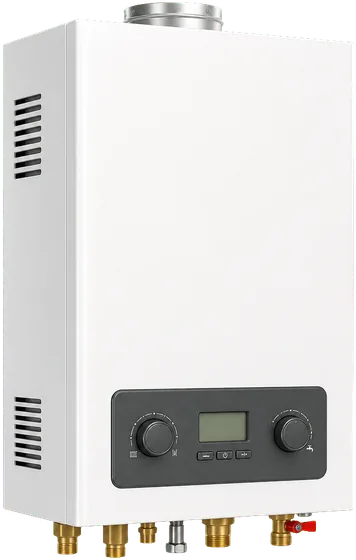
The boiler lights and goes out
A click of ignition, a short tongue of flame in the window, and a few seconds later silence and a lockout. Reset does the same thing again. This is your own gas boiler in a house or in a new flat where it hangs on its own. An ordinary flat on a city riser is not built this way. There is no burner there to reset with a button. The boiler manages to open the gas and to make a spark. Then flame supervision does not confirm that the fire is staying, and the valve closes again. The causes differ: an electrode in soot, little gas at the inlet in the evening, a coaxial pipe pulling its own flue gas back in, or a board that really is not seeing the signal. Which icon lights is the brand's choice. Baxi, Vaillant, and Ariston draw this failure differently. There is no one number for all three. Heating boiler repair starts from 200 000 sum. The exact price comes after diagnostics, once the electrode, the inlet gas, and the flue have been separated. Twenty resets in a row do not heal the board. If you smell gas, do not press reset at all.