
The steam generator spits yellow water and marks the cloth
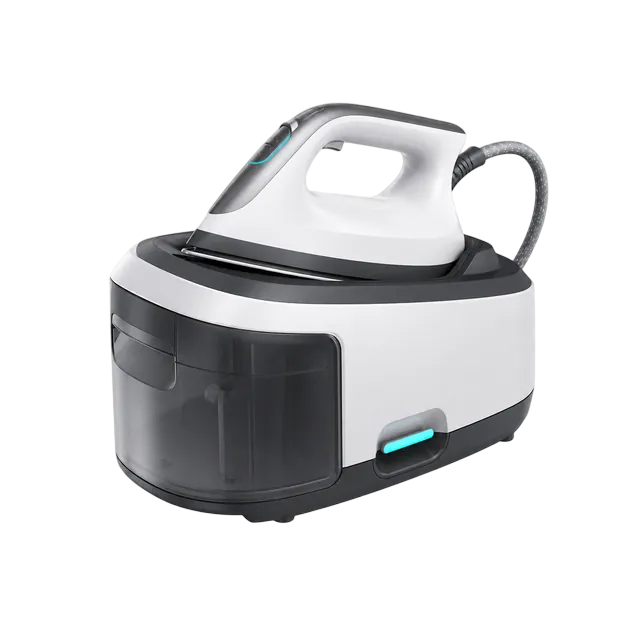
A white shirt picks up rust-coloured spots an hour before you have to leave. What comes out of the soleplate is not steam but warm cloudy water with grit. In Tashkent that is almost always hard water and a boiler that has started giving the soleplate everything it has stored. The plastic tank cannot rust, however much the spots look like rust.
Below is where the colour comes from, and when the soleplate can no longer be washed clean. Steam generator repair starts from 200 000 sum. The exact figure is after diagnostics, before work. If the lamp is on, the pump clicks and there is no steam at all, that is the paired note: the steam generator gives no steam.
A white shirt with rust-coloured spots before the wedding
The mark on white does not arrive as a cloud. It arrives as spots along a seam and a fold, where a drop from a soleplate hole landed. The drop is yellow or rust-coloured, and when it dries it leaves hard grit. Another pass with the iron smears it into a streak. A no-steam setting will not save the shirt if the holes keep weeping as soon as the sole is hot.
The first thought, that the iron is rusty, is usually not about the tank. The tank the station drinks from is plastic on most domestic models. It does not make red oxide. The red comes from the boiler. Scale flakes off, the flakes carry iron from Tashkent water, and the first steam after a pause spits that onto the cloth. A wedding is not a special failure. A white shirt only makes visible what a dark towel hid for a month.
Do not rub the spot with the soleplate again, and do not pour acid into the tank to get it clean before you leave. Acid in a hot boiler under pressure is not a clean. It is a discharge. Switch the station off, let it cool, drain what the proper valve will drain, and look at the colour of that drain. A clear drain with rust-coloured spots on the cloth means the dirt is already in the hose and the soleplate, not only in the boiler.
Scale in the boiler, not a rusty tank
The boiler heats a small charge of water into steam. Hard water leaves a crust on its walls and on the element. The crust itself is grey or white. It turns rust-coloured when iron from the tap is pressed into it, or when overheated scale burns on. From the outside that looks like rust from the tank. There is no point opening the tank to look for holes. A holed plastic tank would leak onto the table, not draw dots on a chest.
Telling the boiler from the tank is simple. The tank sits outside or in the housing and comes out. The boiler is inside, under pressure, with no neck you can fill and shake. Dirty water in the tank is sediment that came in from the tap or came back up a tube. Dirty steam is the boiler and the path after it. We do not call the station finished until we see whether the crust is crumbling, or the element is so coated that the water around it boils in bursts.
A boiler clean is worth doing while the crust still comes off and the element still heats evenly. If the element is in a shell and water leaves for the soleplate in gulps, together with grit, one flush is not enough. The shell will still drop the next piece onto the next shirt. We name the amount of work after the boiler is cold and its condition is visible, not from the colour of one spot on cloth.
The anti-scale valve
Many domestic stations have a removable anti-scale valve, also called a collector. Its job is to catch grit before the grit reaches the hose and the soleplate. When it is packed it stops being a filter and becomes either a plug or a hole: sludge goes past it. The soleplate then makes rust-coloured spots while the tank still looks fairly clean.
The valve has to be present. People lose it during a flush and reassemble the station without it. The boiler then has nowhere to put sediment, so the sediment goes onto the shirt. Do not fit a valve from another model. The wrong stem will not hold pressure, and the station spits a jet instead of spots. We look at the thread, the stem and whether the valve actually moves, not only at the fact that it was unscrewed and soaked.
Washing the valve itself in citric acid on the bench is reasonable only if it came off a cold station and goes back afterwards until it seats, without sitting crooked. Leaving it to dry on a radiator and forgetting it is how this part usually ends. If the spots remain after a clean valve, the grit has already gone further, into the hose in the hinge and into the soleplate channels. The valve is sorted. The cloth is not.
Tap water and the pump
The pump on a steam generator is small. It takes water from the tank and pushes it into the boiler. Hard water carries grains of scale. They sit on the pump valves, the rubber stops sealing, and instead of a steady fill the pump delivers a gulp of cloudy water. From the outside that is clicking and a spit at the start of ironing: the first drop is rust-coloured, then it seems to be steam, and a minute later there is another drop.
A jug filter or water that has been left to settle reduces that load. It does not lift a crust that is already inside. We will not promise a particular jug. One station cares about the temperature of the fill, another about solids floating in the tank. Filling the tank with distilled water is not the answer either. Some level sensors read the conductivity of the water, and near-zero mineral content is read as an empty tank. The pump then clicks and moves nothing.
If the pump valves are already scored, washing the tank does not fix it. The pump is rebuilt when its strip-down shows that is possible, or it is replaced. The price is not automatically the starting figure. Steam-generator work starts from 200 000 sum. The rest depends on the pump, the valve and whether the soleplate is still usable, and it is agreed before a part is ordered.
When the soleplate is already pitted
An aluminium soleplate grows pits around the steam holes over time. Brown paste, scale and burnt residue, sits in the pits. The boiler can be washed until the drain runs clear, and each hole will still give up a drop onto the cloth as soon as it is hot. That is not "flush it once more". That is the shape of the metal. The pit is still there.
Do not scrape the soleplate with a knife or abrasive paper. The coating comes off, the pits get deeper, and everything ironed next sticks to the aluminium. A soleplate stick and a proper soleplate cleaner take burnt film off a flat face. They do not lift paste out of a deep pit. We look through the holes. If the channel is open and the pit is only at the rim, a careful flush from our side sometimes does it, without a homemade drill.
If the pits are effectively open wounds, steam from them will always be dirty, and the soleplate or the whole iron is replaced. Saying that only makes sense after a clean boiler and a clean anti-scale valve. Otherwise the new soleplate is spotted on the first shirt. When there is no steam at all, rather than dirty steam, the logic is different. It is in the steam generator gives no steam.
Bottom line
Rust-coloured spots on a white shirt, in Tashkent, are drawn by scale from the boiler and iron from the tap, not by a rusted plastic tank. The anti-scale valve either catches that grit or passes it into the soleplate. A soleplate full of pits keeps marking cloth after any clean boiler.
Steam generator repair at ProServices starts from 200 000 sum. We name the exact price after diagnostics, before work. Tell us the model and what leaves the soleplate: steam with spots, or yellow water only.
Questions
Common questions
01Do rust-coloured spots mean the tank has rusted?
02Can I pour acid into a hot station before leaving?
03The anti-scale valve is clean and the spots remain. Where next?
04What does it cost when the station spits yellow water?
The steam generator gives no steam: it clicks and the sole stays dry
The lamp is on, the pump clicks, the soleplate is hot and dry. No steam comes out, not even a spit. In Tashkent the usual reason is scale. It lies to the tank sensor, packs the hose in the hinge, or sits as a plug in a soleplate channel. The boiler can be under pressure while that happens. Do not open it hot. Below are five checks along the steam path, with no advice to crack a cap on a hot station. Steam generator repair starts from 200 000 sum. The exact figure is after diagnostics, before work. If there is steam but it is yellow and spots the shirt, that is the other note: yellow water from the steam generator.
The boiler lights and goes out
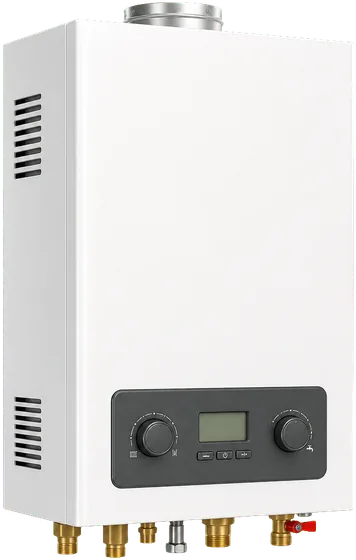
A click of ignition, a short tongue of flame in the window, and a few seconds later silence and a lockout. Reset does the same thing again. This is your own gas boiler in a house or in a new flat where it hangs on its own. An ordinary flat on a city riser is not built this way. There is no burner there to reset with a button. The boiler manages to open the gas and to make a spark. Then flame supervision does not confirm that the fire is staying, and the valve closes again. The causes differ: an electrode in soot, little gas at the inlet in the evening, a coaxial pipe pulling its own flue gas back in, or a board that really is not seeing the signal. Which icon lights is the brand's choice. Baxi, Vaillant, and Ariston draw this failure differently. There is no one number for all three. Heating boiler repair starts from 200 000 sum. The exact price comes after diagnostics, once the electrode, the inlet gas, and the flue have been separated. Twenty resets in a row do not heal the board. If you smell gas, do not press reset at all.