
The steam generator gives no steam: it clicks and the sole stays dry
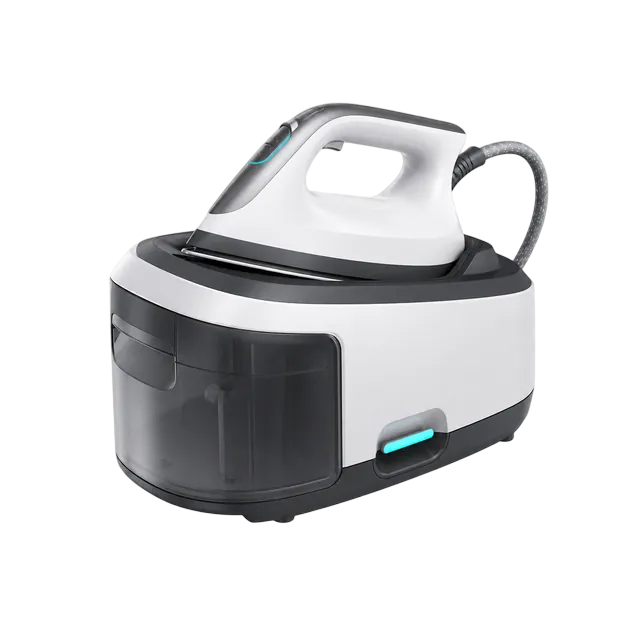
The lamp is on, the pump clicks, the soleplate is hot and dry. No steam comes out, not even a spit. In Tashkent the usual reason is scale. It lies to the tank sensor, packs the hose in the hinge, or sits as a plug in a soleplate channel. The boiler can be under pressure while that happens. Do not open it hot.
Below are five checks along the steam path, with no advice to crack a cap on a hot station. Steam generator repair starts from 200 000 sum. The exact figure is after diagnostics, before work. If there is steam but it is yellow and spots the shirt, that is the other note: yellow water from the steam generator.
The lamp is on, the pump clicks, the iron is dry
A lit lamp means the station is on and at least part of the circuit is alive. The clicks mean the pump is getting pulses. A dry sole means neither water nor steam reached the holes. Together those three facts rule out the wrong socket. They do not rule out the boiler, the sensor or the hose. Any one of them draws exactly this picture.
A pump can click and not move water. The valve inside does not lift, there is air in the tube, the tank looks full, and the pickup sits above the water because the station was tipped or the tank was not pushed home. Clicks, an empty boiler, a sole that heats from the iron's own element or does not heat at all, and no steam. Hammering the steam button then only runs a dry pump.
We listen for where the click is, in the base or in the iron handle. We watch whether the water in the tank drops over a minute of running. If it does not drop, the pump is not picking up, and the sensor and the pump are next. If it drops and the sole stays dry, the water is not becoming steam. It is going to the tray, into a split hose, or standing as a plug in front of the holes. Replacing the boiler while water is not leaving the tank is early.
The empty-tank sensor lies because of scale
An empty-tank sensor is built in more than one way, and scale ruins both common ones. A float in its guide grows a coat and sticks at the bottom. The tank is full, the station is sure there is no water, and the pump is not allowed to run, or runs for a second. Pins that measure conductivity grow a white film and stop seeing water. The same lie, a different mechanism.
It also goes the other way. The boiler sensor, not the tank sensor, decides there is already plenty of water while the boiler is dry. Fill never starts, the element heats an empty chamber, the thermal cut-out opens, the lamp may stay on, and there is no steam. From the outside that is easy to call a dead element. While the sensor is lying, a new element will trip the same protection on the first cycle.
The float should move under a finger on a cold station, without force. If it does not, it is not pulled with pliers. The shaft snaps, and after that it lies mechanically as well. Film comes off the pins when the station is cold and opened where those pins are actually reachable. On some models they are not outside. If fill starts after a clean sensor, the pump was not the cause. If the sensor moves and water is still not taken, then it is the pump and its valves.
The hose in the hinge
Between the base and the iron the hose lives in the hinge. It is bent every time the iron is set down and every time a cuff is ironed. Silicone inside goes hard from steam and heat, scale sits in the fold, and the outside of the hose still looks whole. Steam reaches the hinge and stops. The sole is dry. Sometimes there is a quiet hiss in the handle: steam is leaking into the housing, not into the holes.
Do not work the hinge back and forth on a hot station to punch it through. Hot silicone tears, and steam hits the hand. Switch the station off and let it cool. Then look along the hose and at the bend. A white plug inside shows if the wall is still clear. A crack on the bend shows as a scale trace on the outside, even when it is dry now.
The hose is replaced at the bend. It is not extended with tape. Tape does not hold steam and hides the next crack. If the hose is whole, the handle is dry and the base is dry, the plug is further on, already in the soleplate channel. We do not condemn the hinge then. The price of a hose is not named blind. Steam-generator work starts from 200 000 sum. After that it depends on whether this is the hose, the sensor, or already the soleplate.
A plug in the steam channel
The steam channel in the soleplate is narrow. One grain of baked scale closes it. The boiler still builds pressure, the steam valve still opens, and the holes stay quiet or give one drop a minute. Sometimes the plug lets go on its own and spits brown paste onto the cloth. That is no longer "no steam". It is the neighbouring story about yellow water, and it starts from exactly this plug.
Do not clear the soleplate holes from the outside with a needle or a drill. The needle snaps off in the channel and becomes a second plug. The drill takes aluminium away and leaves a pit that then stores dirt on every shirt. From the outside, on a cold sole, it is reasonable only to look for a dark dot in the hole.
The channel is flushed from the side the steam arrives, once the iron is off and cold, and only if this model comes apart without cutting the soleplate. If it does not come apart, we do not cut it to have a look. We cut when the soleplate is already being replaced. Before that we check whether steam reaches the inlet of the iron. If it does and it does not leave the holes, the plug is in the soleplate. If it does not, the hose or the steam valve in the base is the stop. Mixing those two points means replacing a soleplate whose channel is fine.
Do not open the boiler while it is hot
A steam-generator boiler holds pressure while it is hot, even when no steam reaches the soleplate. A plug in the channel is exactly why that pressure has nowhere to go. A cap, a plug or a valve opened at that moment releases boiling water, not a sample of steam. The burn arrives before anyone can see whether there is scale inside.
Wait until the station cools on its own. Do not pour water over the housing to hurry it, and do not carry it into the bath. Water on a hot connector and on the board ends worse than a lack of steam. After it is cold, release what remains through the proper valve, if this model has one and if that valve is meant for a cold drain. If there is no such valve, there is also no homemade hole with a drill.
Some boilers are not opened by the user at all. There is no cap. The neck is welded, or closed so that forcing it destroys the seal for good. We do not open those out of curiosity. If the missing steam is a sensor, a hose or a plug in the soleplate, the boiler does not need to be touched. If it does, that is done cold, with a new seal, not with a screwdriver on a hot shell. Doubt about whether the housing has cooled is settled by waiting, not by touching the cap with a wet finger.
Bottom line
A dry sole with the lamp on and the pump clicking is a steam path that has stopped: sensor, pump, hose in the hinge, or a plug in the channel. A hot boiler is not part of that check. It is not opened until it has cooled, and on some stations it is not opened at all.
Steam generator repair at ProServices starts from 200 000 sum. We name the exact price after diagnostics, before work. Send the model, whether the pump clicks, and whether the water in the tank drops.
Questions
Common questions
01The lamp is on, the pump clicks, there is no steam. Is the pump dead?
02The station says the tank is empty and it is full. What about the sensor?
03Can I clear the soleplate holes with a needle?
04What does it cost when there is no steam?
The steam generator spits yellow water and marks the cloth
A white shirt picks up rust-coloured spots an hour before you have to leave. What comes out of the soleplate is not steam but warm cloudy water with grit. In Tashkent that is almost always hard water and a boiler that has started giving the soleplate everything it has stored. The plastic tank cannot rust, however much the spots look like rust. Below is where the colour comes from, and when the soleplate can no longer be washed clean. Steam generator repair starts from 200 000 sum. The exact figure is after diagnostics, before work. If the lamp is on, the pump clicks and there is no steam at all, that is the paired note: the steam generator gives no steam.
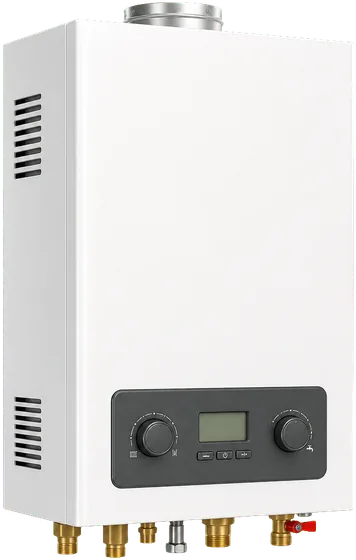
The boiler lights and goes out
A click of ignition, a short tongue of flame in the window, and a few seconds later silence and a lockout. Reset does the same thing again. This is your own gas boiler in a house or in a new flat where it hangs on its own. An ordinary flat on a city riser is not built this way. There is no burner there to reset with a button. The boiler manages to open the gas and to make a spark. Then flame supervision does not confirm that the fire is staying, and the valve closes again. The causes differ: an electrode in soot, little gas at the inlet in the evening, a coaxial pipe pulling its own flue gas back in, or a board that really is not seeing the signal. Which icon lights is the brand's choice. Baxi, Vaillant, and Ariston draw this failure differently. There is no one number for all three. Heating boiler repair starts from 200 000 sum. The exact price comes after diagnostics, once the electrode, the inlet gas, and the flue have been separated. Twenty resets in a row do not heal the board. If you smell gas, do not press reset at all.