
The ice maker is noisy and no ice falls into the bin
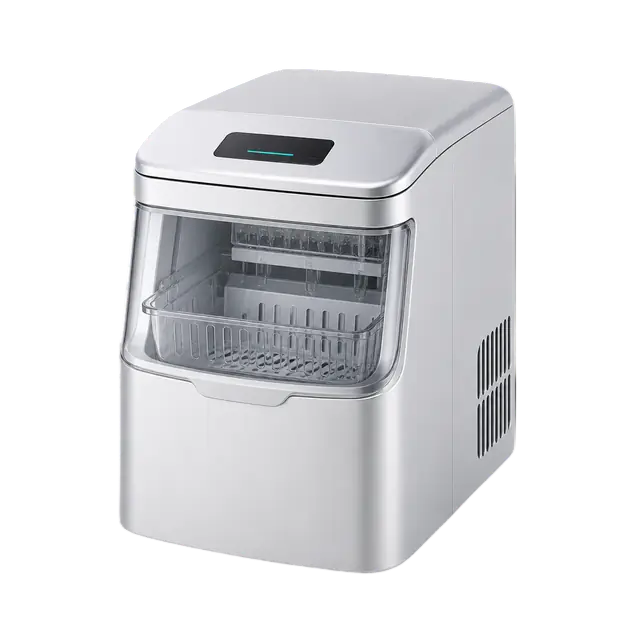
The compressor and the fan are running, the machine sounds alive, and the bin is empty. Ice is either not forming on the plate, or it forms and never harvests. In Tashkent that visit is the same for a home undercounter unit and for a small cafe machine. We do not paste a brand code onto it. Some of these machines have none, and on others the code means something else.
Below are five forks we check before anyone says the word refrigerant. Ice maker repair starts from 250 000 sum. The exact figure is after diagnostics, before work. If ice does fall, but it is white and tastes of a kettle, that is the paired note: cloudy ice.
The machine is noisy and the bin is empty
Noise is not a diagnosis. The compressor hums in the freeze, the condenser fan blows beside it, and sometimes the harvest valve clicks. The bin can still be dry. Cold is there, or seems to be, and ice is not arriving in the container. Do not mix this up with a slow evening. A slow evening at least puts something in the bin.
Look at the plate first, not at a gauge. A bare cold plate means water is not reaching it, or is running past it. A plate in a coat of ice that will not let go means the freeze is alive and the harvest is not. A plate that is barely damp and warm while the compressor is roaring is a different conversation, about the refrigeration circuit, and it does not start until water and the bin sensor are ruled out.
Do not chip that coat off with a knife or a screwdriver. The plate is thin, a blow punctures the circuit, and an empty bin turns into a leak. We wait for the end of the cycle, or we kill the power and let it thaw on its own, if this model will survive that without a hair dryer pointed at one spot. A dryer in one place warps the plate. Which of those is safe on this housing is decided on site, not from a video of another brand.
A sensor thinks the ice is already there
Many machines will not make ice and will not harvest it while they believe the bin is full. The sensor is not looking at the empty space. It is looking past it. The curtain is frozen or jammed with chips. The optical eye is filmed over, or blocked by a drop, or by a bag leaned on the grille. The mechanical arm is bent and rests forever in the full position. The machine honestly refuses to call for water. The compressor may run with nothing to do, or may not start. The bin is empty.
The check is short and has no code. We wipe the eye, move the curtain by hand with the machine off, and see whether the behaviour changes. If a clean eye brings the water fill back, the sensor was the cause, not the compressor. If the eye is clean, the curtain moves, and the machine is still sure the ice is there, then it is the wire and the sensor itself, not another wipe.
Do not tape over the eye to fool the machine into running with no sensor. It will build ice above the bin, into the fan and into the evaporator. We put the sensor back into a state where it actually switches, or we replace it when it truly does not. The price of that part is not the price of the whole repair, and it is named after it is clear that this is the part that is lying.
The inlet valve is packed with scale
The inlet valve opens for a set time and lets water onto the plate. In Tashkent's hard water the seat grows over. The valve either does not open, or it opens a crack. Nothing reaches the plate, or a thin film does, and that film freezes as a crust rather than as cubes. A harvest often cannot shift that crust. It has no cube shape to let go of, and it freezes on as a sheet.
From the outside this is noise and an empty bin again. Sometimes there is a puddle in the tray: the valve does not hold and seeps while the machine waits for a fill. Do not pick the valve apart with a needle on a line that is still under pressure. Water off, power off, and only then the seat. A needle leaves a groove, and after that the valve holds neither open nor shut.
If the seat is only scaled and the diaphragm is alive, a clean is enough. If the diaphragm is torn, or the coil is silent when voltage arrives, the valve is replaced. We measure that voltage. We do not assume it from a click in a neighbouring relay. After a clean or a replacement we look at the film that actually lands on the plate in a cycle, not only at the fact that the valve clicked.
The plate is frozen solid and nothing harvests
The plate is in an even sheet of ice, the freeze time is over, and there is no harvest: the ice does not crack and does not fall. On some machines harvest is a short shot of hot gas that warms the back of the plate. On others it is water run between the ice and the metal. If that valve does not open, the plate stays coated, the compressor keeps making noise, and the bin stays empty.
The causes differ again, and they are not one code. The harvest valve is not getting a command. The coil is there and the mechanism is stuck from scale and heat. The probe that should call the end of the cycle is lying and never asks for a harvest. The ice is frozen to a crust of scale so firmly that the normal warm-up cannot let it go. The last of those is fixed by washing the plate, not by stretching the cycle forever. Freezing a sheet that is already stuck for longer does nothing.
We do not pour kettle water over the plate. The shock warps the metal and drives water into the electrics. We do not hit the ice with a handle. We wait for a proper harvest, or a thaw with no open flame and no blow. If the plate is clean and the harvest valve still does not open when the command is there, the valve is replaced, or whatever is failing to give the command. Which of the two it is shows on a measurement, not on a sound of something clicking somewhere.
A wash cycle nobody ever started
Many machines, home undercounter and cafe alike, have a separate wash cycle. It moves a solution through the water circuit and over the plate. If it has not been started since installation, scale quietly glues ice to the metal. The machine is noisy, harvest formally tries to happen, and the bin is empty or holds chips that weld together at once.
Do not start that wash blind with the first bottle from the kitchen. Some machines will not accept an acid that is fine for a kettle, and several batches of ice then smell of the chemical. We look at whether this panel even has a wash cycle, whether there is a separate wash pump in the sump, and what it is filled with. If there is no wash button, that does not mean the plate cannot be serviced. It means the service is a different shape, with the power off and the water side opened.
After a wash, the first batch does not go into a drink. It goes down the sink, the same as the first batch after a long idle. If the ice is then white and tastes of a kettle, the taste is cloudy ice, even though harvest now works. Fixing the drop and never looking at the filter puts the same water back in the glass. It merely arrives.
Bottom line
An empty bin on a noisy machine starts with the sensor, the inlet valve and the plate, not with a refrigerant charge. A wash nobody ever runs is often why the ice froze on and will not fall. That coat does not come off with a knife.
Ice maker repair at ProServices starts from 250 000 sum. We name the exact price after diagnostics, before work. Tell us whether the plate is bare, coated, or the machine believes the bin is full.
Questions
Common questions
01The machine is noisy and the bin is empty. Is it the refrigerant?
02The sensor says there is ice and the bin is empty. What is wrong with it?
03Can I knock the ice off the plate with a knife?
04What does it cost when the ice will not harvest?
The ice maker produces cloudy ice that tastes of the kettle
The ice is white, it crumbles, and it smells of a kettle, while the machine hums and the bin slowly fills. In Tashkent that call comes from home undercounter units and from small cafe machines alike. The water is hard, the filter has been there since opening day, and the evaporator plate is filmed with scale. A clear cube from a bar photograph is not the first question. The water is, and the way it freezes. Below are five causes we separate on site, without inventing a code that belongs to one brand. Ice maker repair starts from 250 000 sum. The exact figure is after diagnostics, before any work. If the plate is roaring and nothing falls into the bin, that is the paired note: the ice maker will not harvest.
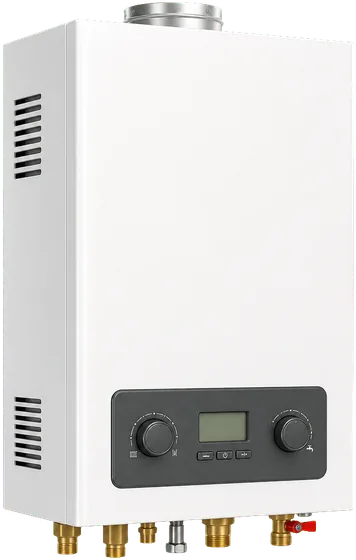
The boiler lights and goes out
A click of ignition, a short tongue of flame in the window, and a few seconds later silence and a lockout. Reset does the same thing again. This is your own gas boiler in a house or in a new flat where it hangs on its own. An ordinary flat on a city riser is not built this way. There is no burner there to reset with a button. The boiler manages to open the gas and to make a spark. Then flame supervision does not confirm that the fire is staying, and the valve closes again. The causes differ: an electrode in soot, little gas at the inlet in the evening, a coaxial pipe pulling its own flue gas back in, or a board that really is not seeing the signal. Which icon lights is the brand's choice. Baxi, Vaillant, and Ariston draw this failure differently. There is no one number for all three. Heating boiler repair starts from 200 000 sum. The exact price comes after diagnostics, once the electrode, the inlet gas, and the flue have been separated. Twenty resets in a row do not heal the board. If you smell gas, do not press reset at all.