
The ice maker produces cloudy ice that tastes of the kettle
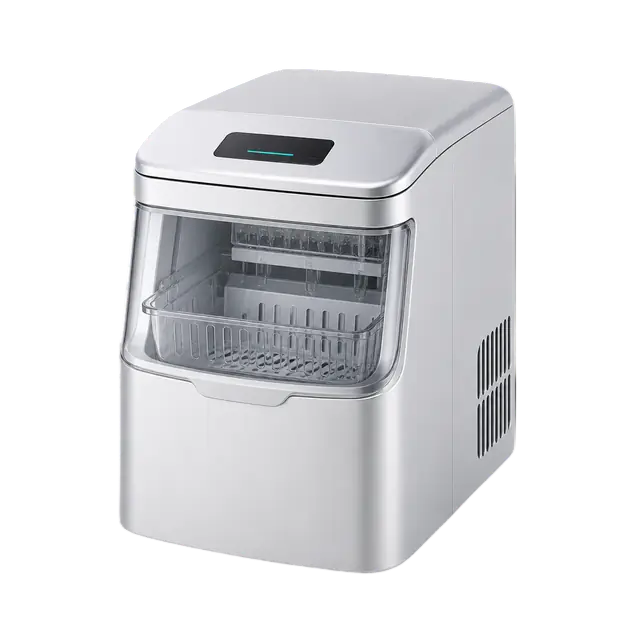
The ice is white, it crumbles, and it smells of a kettle, while the machine hums and the bin slowly fills. In Tashkent that call comes from home undercounter units and from small cafe machines alike. The water is hard, the filter has been there since opening day, and the evaporator plate is filmed with scale. A clear cube from a bar photograph is not the first question. The water is, and the way it freezes.
Below are five causes we separate on site, without inventing a code that belongs to one brand. Ice maker repair starts from 250 000 sum. The exact figure is after diagnostics, before any work. If the plate is roaring and nothing falls into the bin, that is the paired note: the ice maker will not harvest.
Ice that is white and tastes of the kettle
A white cube almost always means the water froze fast, from the outside inward, and locked air and dissolved salts inside. Clear ice grows slowly and in one direction. A home undercounter unit and a small cafe cuber are not built to do that. They are built to keep up, not to cast a display crystal. A little cloudiness on that ice is not, by itself, a breakdown.
The kettle taste is different. That is how water smells and tastes after it has been heated over and over against scale: minerals concentrate, a film sits on the walls, and the ice carries that smell into the glass. A guest notices it before the colour. If the cube is white and also tastes of a kettle or of metal, look at the inlet water and the plate, not at a colder setting turned up on a guess.
We taste the water before the machine and the water in the machine's sump, not ice that has already sat in the bin. If the supply tastes clean and the sump tastes of scale, the circuit inside is the problem. If the tap already tastes that way, a filter ahead of the machine makes sense even when the unit is new. An error code is irrelevant here and is laid out differently on different brands, so we do not invent one. The decision is visible in the water and on the plate.
A filter that has not been changed since opening
On a small site the filter is often fitted on opening day and then forgotten. A cartridge that was meant to take out sediment and part of the hardness becomes, after a few months, a source of taste itself: the carbon is spent, the housing is slimy inside, and the water after it is worse than the tap. The ice goes whiter and smells like a carafe that was left out.
A home undercounter machine often has no separate filter at all, just a hose from under the sink. That is tolerable for a kettle. It is not tolerable for ice people eat. All the calcium in Tashkent water stays in the cube, because freezing gives it nowhere to go except into the crystal and into the film on the plate. The hose can be new and the taste old.
We do not hand out "change it once a year by eye" as a rule for every site. We look at which housing is fitted, whether it has a date, and what comes out of it into a clear glass. If the water after the filter is cloudier and smells stronger than the water before it, the cartridge is not washed. It comes off. An empty housing is more honest than dead carbon. What interval this place actually needs, we say after we see how much ice it uses, not from a sticker on someone else's machine.
Scale on the evaporator plate
The evaporator plate is the cold wall where water becomes ice. Scale on it works like a coat. Freezing happens in patches: where the metal is bare the cube is denser, where the white film sits it is loose and cloudy. The finished ice is crooked, with a white core, and it tastes of the same kettle, because the layer on the plate keeps giving each new sheet of water what it has stored.
A thick film also gets in the way of harvest. The cube freezes to the crust rather than to the metal, and it either crumbles into the bin as white mush or does not fall at all. The second case is the neighbouring fault, when the machine will not harvest. Do not pick the crust off with a knife. The plate is thin, a scratch becomes a hole in the refrigeration circuit, and the conversation then is about tightness, not about taste.
We lift the film with a cleaner that suits this circuit, after we see what the plate is made of and which seals sit next to it. Kitchen vinegar leaves a smell in the next batches on some machines and does not agree with parts beside the plate. So we do not hand out one home recipe. After the clean, the first batch still goes down the sink. It carries off the last of the chemical and the old film.
A harvest that comes too early
Harvest should happen when the cube already holds its shape and the middle has caught up. If the freeze cycle stops early, what falls into the bin is wet, white ice that welds together. In the glass it melts at once and clouds the drink. From the counter it looks as if the machine makes bad ice, even when the water is ordinary and the plate is still clean.
An early harvest is opened in more than one way, and it is not one brand's code. On some machines the thickness probe is coated with scale and decides the cube is already thick. On some a timer was shortened because someone wanted more batches in an evening. On some the water onto the plate is too warm, or too thin a film, and the middle cannot finish in the time allowed. We see which of those three this machine is doing. We do not read another maker's fault list at it.
Wet early ice is not fixed by guessing a colder setting. Probe and water feed first, then cycle time. Otherwise the compressor runs longer, the cube is still white, and the electricity does nothing for the glass. If the ice still crumbles after a normal freeze time, we go back to the plate and the filter instead of turning the cold in circles.
The first batch after a long idle goes in the bin
The machine sat over a weekend, a holiday, or simply a night with the supply off. Water in the hose, in the filter housing and in the sump was not renewed. It is warm, and it tastes of rubber and old scale. The first batch honestly freezes that water. The ice is white and smells of a kettle, even if the day before it was fine to eat.
That batch does not go into a drink, and it does not stay in the bin to air out. A bin does not air ice. It stores it. We dump the first full drop in the sink, let the machine take water from the line instead of from the stagnant sump, and only taste the next batch. If the second is the same, the idle is not the cause. Filter and plate are next.
Before a long stop it is better to drain the sump than to leave water on a plate that will warm up. After the stop it is worth running a few cycles, if the model allows that without ice in the bin, and washing the bin itself. A film on the walls dirties a cube that was otherwise fine. That is upkeep, not a repair. If the kettle taste is still there after two fresh batches, then call us, instead of throwing ice away all day.
Bottom line
Cloudy ice that tastes of a kettle, in Tashkent, is almost always the water, a forgotten filter and film on the plate. An early harvest adds wet white mush. The first batch after a long idle should not reach a glass at all. A home undercounter unit and a small cafe machine follow the same logic.
Ice maker repair at ProServices starts from 250 000 sum. We name the exact price after diagnostics, before work. Tell us whether the ice is only cloudy, or whether it also refuses to leave the plate.
Questions
Common questions
01Does white ice always mean a breakdown?
02The filter has been there since opening. Is a rinse enough?
03Can I scrape scale off the plate with a knife?
04What does it cost if the ice is cloudy?
The ice maker is noisy and no ice falls into the bin
The compressor and the fan are running, the machine sounds alive, and the bin is empty. Ice is either not forming on the plate, or it forms and never harvests. In Tashkent that visit is the same for a home undercounter unit and for a small cafe machine. We do not paste a brand code onto it. Some of these machines have none, and on others the code means something else. Below are five forks we check before anyone says the word refrigerant. Ice maker repair starts from 250 000 sum. The exact figure is after diagnostics, before work. If ice does fall, but it is white and tastes of a kettle, that is the paired note: cloudy ice.
The boiler lights and goes out
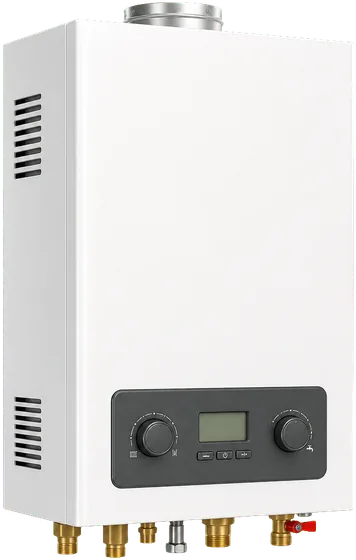
A click of ignition, a short tongue of flame in the window, and a few seconds later silence and a lockout. Reset does the same thing again. This is your own gas boiler in a house or in a new flat where it hangs on its own. An ordinary flat on a city riser is not built this way. There is no burner there to reset with a button. The boiler manages to open the gas and to make a spark. Then flame supervision does not confirm that the fire is staying, and the valve closes again. The causes differ: an electrode in soot, little gas at the inlet in the evening, a coaxial pipe pulling its own flue gas back in, or a board that really is not seeing the signal. Which icon lights is the brand's choice. Baxi, Vaillant, and Ariston draw this failure differently. There is no one number for all three. Heating boiler repair starts from 200 000 sum. The exact price comes after diagnostics, once the electrode, the inlet gas, and the flue have been separated. Twenty resets in a row do not heal the board. If you smell gas, do not press reset at all.