
The air conditioner does not cool in the heat
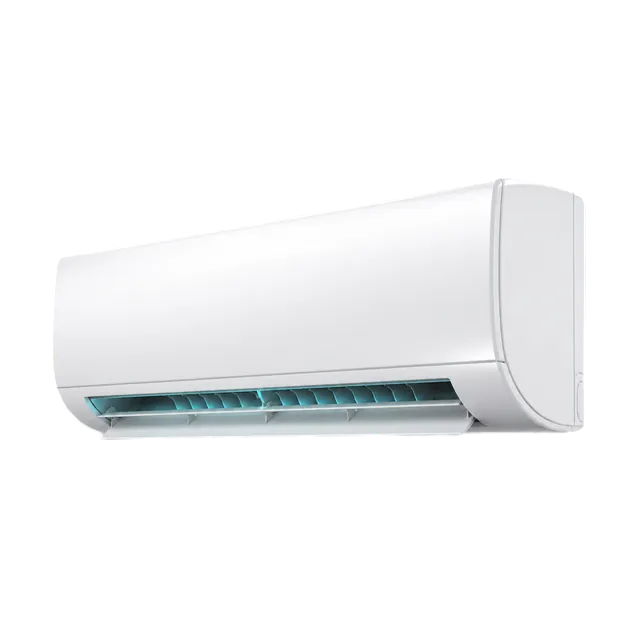
The remote sits on 18, the mode looks like cool, and the slot blows the same air that is already in the room. In July in Tashkent that picture is common, and it rarely starts with a cylinder. The filters have lain there since last August as grey felt. The outdoor unit is sewn into a box or stands on a glazed loggia and breathes its own heat. In the evening, in an old building, the voltage sags, the compressor lets go, and the indoor fan keeps blowing the room.
A dirty coil and a short refrigerant charge look alike from the doorway and are fixed differently. Air through the filter and through the box first, then oil on the flares, and only then a conversation about gas. If warm air has brought a drip onto the sofa, that is the next piece: an air conditioner dripping indoors. The job is air conditioner repair, from 150 000 sum, exact price after diagnostics.
The remote says 18, and the slot blows room air
The number 18 on the remote is a setpoint, not the temperature of the air in the slot. I look at the mode first: the snowflake, not fan and not dry. Dry runs the indoor fan and is barely obliged to cool the room. The setpoint has to be below what the room already is. The louvers are open, not clicked into a wall across the stream. That is half a minute, and it often ends the complaint.
Then a hand at the slot. Air clearly colder than the room means the circuit is giving something, and the complaint may be weak flow: the filter, closed louvers, dirty fins. Air like the room, outdoor unit silent or clicking and quitting, means cold is not being made. Air like the room while the outdoor unit roars means the heat has nowhere to go, or the evaporator is not taking it. Those are three calls. A cylinder does not tell them apart.
Judging the unit at five on a July evening, at the peak of heat and of the sag, is early. If it can be done, repeat after washing the filters in the morning, when the line is calmer. Still no colder in the morning, and I go to the outdoor unit and the fins, not to the valve. I do not name the exact sum before that. The work is from 150 000 sum, the figure after diagnostics.
Filters that have stayed in since last August
The meshes under the lid become felt over a season in Tashkent. Almost no air crosses them, the evaporator does not deliver cold into the room, and it ices or trips on protection. The slot then pulls air that is barely cool, or simply room air. The owner sees the remote and thinks of gas. Gas behind felt is invisible and is not cured while the mesh stays in place.
The meshes come out, are washed with water that is not boiling and without a hard brush on thin cloth, dried, and put back dry. A wet mesh smells and drips on its own. A vacuum in place takes only the top. The felt inside remains. After they are in, the unit runs with the louvers open. A hand at the slot should feel the difference the same day, if the fins under the mesh are still alive.
If the air is the same after clean, dry meshes, the filter is no longer the cause. The dust is already deeper on the fins, or the outdoor unit cannot breathe, or it is the circuit. A drip off a dirty evaporator into the room is a separate story about the tray: an air conditioner dripping indoors. Washing meshes is not inside the price of a charge, and it does not replace one.
An outdoor unit closed inside a box
The outdoor unit throws heat at the street. A box with a narrow slot, a closed balcony, or a glazed loggia takes that heat back into the same air the unit breathes. In May it still keeps up. In July the air in the box is hot, the pressure climbs, and the cold in the room falls, while the remote is still on 18. That is not "low on refrigerant only in the heat". That is a unit heating itself.
A palm of opening at the sides and a free discharge from the fan are a condition, not decoration. A solid grille a finger cannot pass toward the fan is not what I call ventilation. A loggia where a person cannot breathe at noon is a worse place for an outdoor unit. Moving it is a separate job. Sometimes it is enough to open the side of the box and take out whatever was stacked there for winter.
While the box is closed, adding refrigerant is pointless. The heat still cannot leave, and extra gas in the heat only raises pressure. Outdoor air first, then a conversation about the circuit. Dust on the outdoor fins collects faster in such a box than on an open wall. It is washed with the unit powered down, not "on the run, from a hose into the fan".
A dirty coil and a low charge are not the same job
Weak cold in the heat comes from packed fins and from a short refrigerant charge. From the doorway they look alike: the unit runs, and a hand at the slot feels no cold. The fins are washed first, indoor and outdoor. Poplar fluff and dust on the outdoor unit in Tashkent close the airflow by June as thoroughly as felt. A clean unit that still has nothing to cool with is a different conversation.
I do not put a low charge first until I see a trace. Oil on a flare nut, dark sticky dust on a joint, is a reason to look for the hole, not to top up "into the green". A top-up into a dirty unit or a boxed one leaves, or sits as extra pressure. I do not quote grams or a pressure on the phone. A dry clean nut and a cold suction pipe after a wash are not an automatic cylinder. Mode, filter, and the air in the box come first.
If there is oil, gas without the leak site feeds the hole, the same way it does on a fridge. The compressor is already at its limit in the heat. The work is from 150 000 sum. The exact sum is after diagnostics. Washing fins, opening a box, or searching for a leak are not one price and not one visit "with a cylinder just in case".
Evening voltage sag in an old block
In an old building, in the evening, when the lights, the stove, and two air conditioners are on the same line, the voltage sags. The outdoor compressor does not hold the start, or it stops on protection, while the indoor fan keeps blowing. Room air comes out of the slot, and the remote honestly shows 18. At eleven in the morning the same unit may cool. That is not cured with refrigerant, and it does not look like a dirty filter, which is bad in the morning too.
The sign in the flat is simple: the lamp on the same line dims in the hours when the cold disappears. The measurement is on the outdoor unit's supply, under load, in the evening, not at noon from memory. Terminals are not opened out of interest. A stabilizer is a conversation after the number, if the number is actually low, not the first line of the estimate.
Until that evening measurement is done, the cylinder valve stays shut. In the daytime, on steady voltage, look at the filter, the box, and the fins. If there is no cold air in the morning either, the sag is irrelevant. If cold exists only in the daytime and in the evening the compressor lets go while the lamp dims, the circuit is not opened. This is air conditioner repair, and the order matters more than the cylinder.
Bottom line
A remote on 18 with room air from the slot is not yet a call for gas. Filters since August, a closed box on the outdoor unit, and an evening sag in an old building can imitate an empty circuit. The fins are washed before anyone talks about refrigerant. Oil on a flare changes the order. It does not cancel the search for the hole.
The work is from 150 000 sum, the figure after diagnostics. A cylinder at the peak of a July evening, without a wash and without a measurement, only feeds the mistake. A drip off dirty fins onto the sofa is about the drain, not about grams.
Questions
Common questions
01The remote is on 18 and the air is warm. Is the refrigerant low straight away?
02The outdoor unit sits in a decorative box. Does that matter in the heat?
03It cools in the daytime and blows room air in the evening. Is that a leak?
04What does it cost when an air conditioner fails in the heat?
The air conditioner drips into the room
A stain grows on the wall under the indoor unit, and the louvers drip onto the sofa. In the ordinary case that is condensate, not refrigerant that has "leaked out". Refrigerant does not make a puddle on the floor. Clear water with no oily film is the drain path: the hose, the tray, or the slope of the unit. Oily or sticky liquid means stop. That is not a bottle of water. After a dusty summer there is silt in the tray. In July there is more water than in April, and a half-blocked drain starts dripping into the room. After a renovation the hose often points uphill. A unit hung by eye drains past its own outlet. If the air from the slot is warm as well, read an air conditioner that fails in the heat. The job itself is air conditioner repair, from 150 000 sum, exact price after diagnostics.
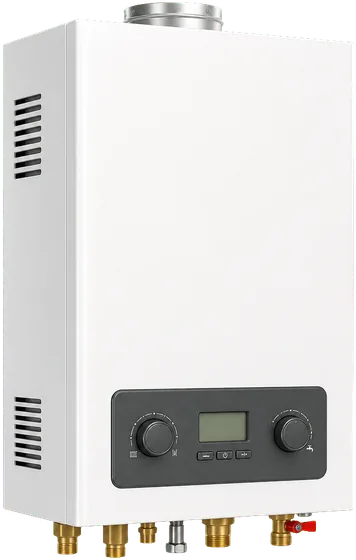
The boiler lights and goes out
A click of ignition, a short tongue of flame in the window, and a few seconds later silence and a lockout. Reset does the same thing again. This is your own gas boiler in a house or in a new flat where it hangs on its own. An ordinary flat on a city riser is not built this way. There is no burner there to reset with a button. The boiler manages to open the gas and to make a spark. Then flame supervision does not confirm that the fire is staying, and the valve closes again. The causes differ: an electrode in soot, little gas at the inlet in the evening, a coaxial pipe pulling its own flue gas back in, or a board that really is not seeing the signal. Which icon lights is the brand's choice. Baxi, Vaillant, and Ariston draw this failure differently. There is no one number for all three. Heating boiler repair starts from 200 000 sum. The exact price comes after diagnostics, once the electrode, the inlet gas, and the flue have been separated. Twenty resets in a row do not heal the board. If you smell gas, do not press reset at all.