
The air conditioner drips into the room
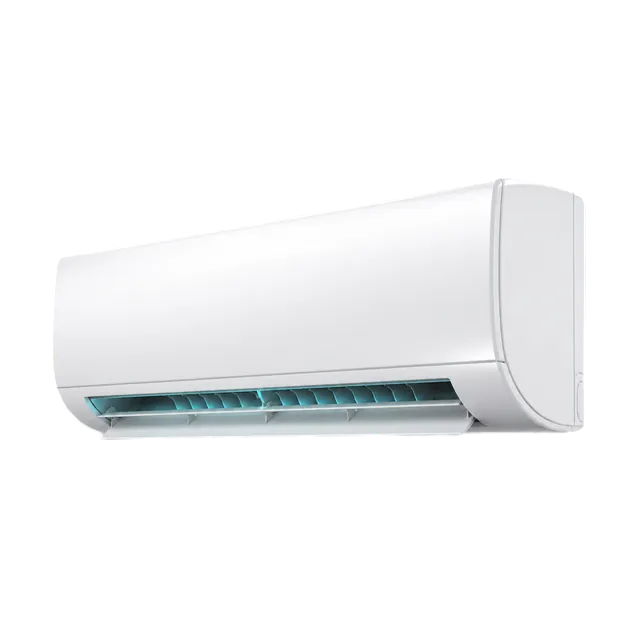
A stain grows on the wall under the indoor unit, and the louvers drip onto the sofa. In the ordinary case that is condensate, not refrigerant that has "leaked out". Refrigerant does not make a puddle on the floor. Clear water with no oily film is the drain path: the hose, the tray, or the slope of the unit. Oily or sticky liquid means stop. That is not a bottle of water.
After a dusty summer there is silt in the tray. In July there is more water than in April, and a half-blocked drain starts dripping into the room. After a renovation the hose often points uphill. A unit hung by eye drains past its own outlet. If the air from the slot is warm as well, read an air conditioner that fails in the heat. The job itself is air conditioner repair, from 150 000 sum, exact price after diagnostics.
A stain on the wall under the indoor unit
The stain starts under the right or left edge of the indoor unit and creeps down the paint. Often it is the rear lip of the tray: water missed the outlet and left along the wall. Less often the copper pipes are sweating because the insulation is cut or has slid off. In July damp air sits on cold copper, and the same drip runs down the wall while the drain itself is alive. I look at where it is wet: from the louvers, from under the case at the back, or along the line set.
The louvers drip when the evaporator is dirty and water tears off the fins past the tray, or when the tray is already full. Along the pipes, with a dry tray and dry louvers, that is insulation, not a pump and not a board. An oily track on a flare nut is another conversation. It is not settled with a bottle, and nothing is poured into the room to "check the pressure".
An evening voltage sag does not paint the stain. The unit can stop, and water will not appear from nowhere. A board is not sold in place of a hose. If the stain is clear and has no smell of oil, next are the hose, the tray, and the slope. The work is from 150 000 sum, and the exact sum comes after it is clear whether this is water or oil.
A drain hose aimed uphill
Water leaves the tray only downhill. The hose has to fall toward the street or a riser with no stretch where it climbs above the unit. After a renovation it is often clipped to a plasterboard frame and lifted so it can reach a distant stack. That makes a loop higher than the tray. A wall-mounted room unit does not always have a pump. More often it is gravity. Gravity does not climb, so the water comes back and exits into the room.
The second kink: the hose is outside, but the end is turned up to a canopy or bent with a clamp "so it will not draft". Outside in July it is also hot, and the soft plastic holds the bend. The end should point down and should not sit in a jar raised above the unit. A jar below the unit, as a temporary catch, can still take water. A jar on a sill above the tray is a fountain back into the room.
The hose is not extended with clear tape. A joint on a gravity drain sucks air and then leaks inside the wall, where it stays invisible until the corner goes soft. If the run is long and has no fall along its whole length, that is a relaying, not "blow it and forget". Before any blast of air I look at the whole visible run, not only the hole in the wall.
Silt in the tray after a dusty summer
Tashkent dust, together with condensate, becomes grey silt in the tray and in the outlet over a summer. In spring the drain still kept up. In July the unit pulls more water out of the air, the same hole floods, and the extra leaves through the louvers. That is not a sudden failure on the hottest day. That is silt that finally ran out of section.
Filters that have not come out since last August feed this silt. Dust from them sits on the wet evaporator, washes into the tray, and stands there as jelly. Filters are washed and dried. They are not put back wet: a wet filter drips and smells on its own. The tray and the outlet are cleaned with the indoor unit's supply off, not with only the remote off. The remote leaves the board powered.
After cleaning, water should leave as a stream, not stand as a puddle on the lip of the tray. If the tray is empty, the filters are clean, and the fins still drip, the evaporator is packed so that water does not fall back into the tray. That is already close to weak cooling: an air conditioner that fails in the heat. Washing the tray and the fins is not a gas charge.
The unit was hung by eye
The indoor unit should lean a few millimetres toward the drain, not "visibly downhill into the room". By eye it is often hung level with the ceiling, and the ceiling itself runs off. Or the slope is made the wrong way, toward the blind end of the tray. Water stands in the far corner and overflows behind the case, onto the paint, while the hose below is dry and blows through.
The level goes on the case, not on the louvers. The louvers swing and lie. The bubble shows where the water actually wants to go. Correcting the slope on a line set that is already foamed in is careful work: the unit is not torn off the wall, and the pipes are not bent at the flare. A ripped nut gives oil, and the drip conversation ends.
Dust and July have nothing to do with it if the slope was backwards from the first day. There was simply less water in spring, and the stain showed up in the heat. "It did not drip before" does not cancel the level. Bubble first, then silt, then the hose. A board does not correct a slope.
A bottle can test the drain before the case comes off
The whole case does not have to come off to learn whether the drain is alive. The indoor unit's supply is switched off, not only the remote. A clear bottle goes on the hose outlet, below the unit. Through the removed filter, if the tray is visible, about a glass of water is poured toward the back of the tray. Not a litre and not a bucket. A towel is next to it. The glass either arrives in the bottle quickly or comes out the front.
The bottle fills and the front stays dry: the path is open. The drip during running is then in the slope, in a dirty evaporator, or in a sweating line set with no insulation. The bottle stays empty and water shows at the louvers or under the case: the tray outlet or the hose is blocked, or the hose runs uphill. No more water is poured. An untested litre stays in the wall.
The bottle does not measure refrigerant pressure and does not cure oil on a flare nut. It only tests gravity. If the path is open, the slope is right, the tray is clean, and in the heat the unit still does not cool, that is another call. Work on a drip starts from 150 000 sum. The exact sum is after diagnostics. Blowing a hose, washing a tray, or rehanging a unit are not one price.
Bottom line
A clear drip from the indoor unit is the tray, the hose, or the slope. The hose should not point uphill, silt after a dusty summer should not stand in the outlet, and the unit is not hung only to the ceiling line. A glass of water and a bottle below the hose show the path without taking the whole case off.
Oil on a nut and a sticky liquid are not this order. The work is from 150 000 sum, the figure after diagnostics. Power comes off before water goes in the tray, and it is not poured by the litre.
Questions
Common questions
01Water drips from the unit. Has the refrigerant leaked out?
02Why was it dry in spring and dripping in July?
03How does a bottle test the drain without removing the whole case?
04What does it cost when an air conditioner drips into the room?
The air conditioner does not cool in the heat
The remote sits on 18, the mode looks like cool, and the slot blows the same air that is already in the room. In July in Tashkent that picture is common, and it rarely starts with a cylinder. The filters have lain there since last August as grey felt. The outdoor unit is sewn into a box or stands on a glazed loggia and breathes its own heat. In the evening, in an old building, the voltage sags, the compressor lets go, and the indoor fan keeps blowing the room. A dirty coil and a short refrigerant charge look alike from the doorway and are fixed differently. Air through the filter and through the box first, then oil on the flares, and only then a conversation about gas. If warm air has brought a drip onto the sofa, that is the next piece: an air conditioner dripping indoors. The job is air conditioner repair, from 150 000 sum, exact price after diagnostics.
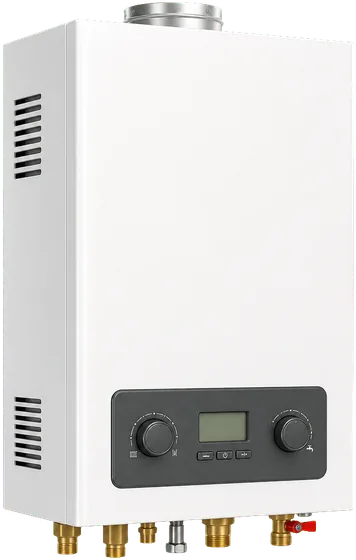
The boiler lights and goes out
A click of ignition, a short tongue of flame in the window, and a few seconds later silence and a lockout. Reset does the same thing again. This is your own gas boiler in a house or in a new flat where it hangs on its own. An ordinary flat on a city riser is not built this way. There is no burner there to reset with a button. The boiler manages to open the gas and to make a spark. Then flame supervision does not confirm that the fire is staying, and the valve closes again. The causes differ: an electrode in soot, little gas at the inlet in the evening, a coaxial pipe pulling its own flue gas back in, or a board that really is not seeing the signal. Which icon lights is the brand's choice. Baxi, Vaillant, and Ariston draw this failure differently. There is no one number for all three. Heating boiler repair starts from 200 000 sum. The exact price comes after diagnostics, once the electrode, the inlet gas, and the flue have been separated. Twenty resets in a row do not heal the board. If you smell gas, do not press reset at all.