
The coffee machine will not pour: the pump hums, the cup is empty
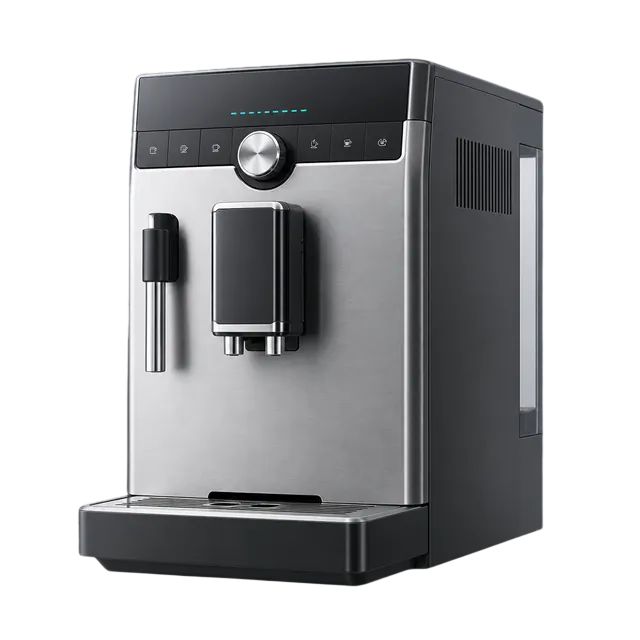
The pump hums, the cycle seems to run, and the cup stays dry. That is not one fault. On some machines the tank valve is still shut because the tank never sat on its magnet. On others a tablet or a chunk of scale is in the brew unit. On others the flow-meter impeller is still, and the board itself cuts the supply.
Below is how we separate those on site, without changing the pump on a guess. Coffee machine repair starts from 200 000 sum. The exact figure is after diagnostics, before any work. If the water comes back and the cup tastes of aspirin, that is the other note: bitter taste and scale.
The pump hums and the cup stays empty
If it hums, the pump is getting power. Silence would be a different story: an open circuit, a burnt winding, a board that never gave the command. Here the command is present and the cup is empty. Water is either not entering the pump, or it is leaving the wrong way: into the drip tray, back to the tank, past the brew unit.
The sound alone is easy to mix up. Cavitation, when the pump is chewing air, hums higher and drier than a pump working under water. A blocked outlet hums heavier, and the body warms. From the outside both look the same: the cycle started, there is no coffee. We do not call the pump dead from a kitchen noise described over the phone.
We then follow the path in order. Tank and its valve, the tank filter if this model has one, the pump inlet, the flow meter, the valve, the brew unit or portafilter, the spout. The repair is where that path actually stops. Fitting a new pump while the magnetic inlet valve is still shut puts a new part into the same empty job.
The tank never sat on the magnet
On many automatics the tank does not merely stand in a niche. It carries a magnet in the base or the wall, and the socket holds a valve. Until the tank is fully down, the valve stays shut. The pump starts and pulls air. The cup stays empty. Sometimes, after a few seconds, the machine says there is no water, although the tank is full and was just washed.
The usual cause is ordinary. After a wash the tank sits a little high, a tube is in the way, scale crumbs or coffee slime are in the socket, or a cracked wall has cocked the tank. The magnet is there and does not reach the valve. Forcing the tank down breaks the spigot and the valve itself. We take the tank off, look at the socket, clear the deposit, and seat it square.
The presence sensor is a separate check. A reed switch or a Hall sensor also watches that magnet. If the magnet is seated and the board still does not see the tank, the hum can stop at once: the pump command is removed. That is no longer hydraulics. It is the sensor or its wire. Confusing it with a dead pump is an expensive mistake. We check whether the valve opens by hand with the tank off, and whether the board sees the magnet, before we say what to replace.
A tablet has jammed the brew unit
A descale tablet belongs in the tank or in the proper slot, not in the brew chamber. If a whole tablet got into the unit, or a piece of undissolved crust rode in there, the piston does not close as it should, or it closes and the water has nowhere to leave. From the outside this is again a hum and a dry cup, sometimes with the brew-unit drive grinding.
Hard Tashkent water is exactly what produces the second case. A thick crust breaks off in chunks, a chunk clears the tank and lodges in a narrow part of the unit or in the valve just before it. The chemical that was started so it would clear the path is no longer dissolving a plug. It is pushing cloudy water in a circle until the pump has no outlet.
The unit comes out on a cold machine, unplugged, and only if this model has a removable one. A whole tablet or a white stone is obvious. If the piston does not move by hand without force, we do not lean on it with a screwdriver: the drive gears chip. A non-removable path and the valve ahead of the unit are our job. Once the water is back, the taste can still be bitter. That is the neighbouring subject, bitter taste and scale, not a reason to replace the brew unit at once.
The flow meter and the pump itself
The flow meter is a small impeller in the water path. The board counts pulses and knows that water is actually moving. Scale, coffee dust or that same chunk after a tablet locks the impeller. There are no pulses. The board decides there is no supply and drops the pump command after a second or two. From the side this is a short hum and an empty cup. The pump itself can be fine.
A pump that is actually finished fails differently. The impeller is worn, the housing is cracked, the check valve will not hold: a long hum, no pressure at the outlet, a hose into a glass that does not spit. Or there is no hum at all. Those two faults sound alike from the kitchen and separate in minutes on the bench. The flow-meter impeller either spins from a breath or sits solid. The pump either makes pressure into a hose or only gets warm.
So the sentence "change the pump" means nothing before that check. Sometimes it is enough to take the impeller out, wash the chamber and put the meter back. Sometimes the chamber is already broken and the part has to be replaced. We do not price that part blind. Coffee-machine work starts from 200 000 sum. The rest depends on what actually stopped, and it is agreed before a part is ordered.
A capsule machine with a blocked needle
A capsule machine has no piston brew unit. It has a needle. The upper one pierces the capsule and sends in hot water. The lower one lets the drink out into the cup. Dried coffee, a sugar film or fine scale blocks a hole thinner than a match. The pump still hums honestly: water meets the needle and goes to the drip tray, or stays in a capsule that swells.
Do not clear that needle blind with a drill or a thick pin. The hole is soft, the needle bends easily, and then the chamber leaks past the capsule on every cup. Unplug the machine, let it cool, and look at the needle from the side the capsule enters. A dry dark dot in the hole is the blockage. If the needle is already bent, or the hole cannot be seen, stop.
The lower needle blocks at least as often as the upper one. Water then enters the capsule and does not reach the cup: the capsule is wet, the tray is full, there is no drink. That is not a reason to open the boiler. On some models the needle is a separate part, on others it comes with the holder. Which one your housing is, we can see only on it. After a clear, it is worth running water with no capsule and checking that the jet from the needle is straight, not a fan to one side.
Bottom line
An empty cup with a humming pump is almost never fixed by changing the pump in the first minute. Tank and magnet first, then the brew unit and the tablet, then the flow meter, and only then the pump itself. A capsule machine is a separate story about a needle that a thick tool will damage.
Coffee machine repair at ProServices starts from 200 000 sum. We name the exact price after diagnostics, before work starts. Send the model and what you hear: a long hum, a short hum, or silence.
Questions
Common questions
01The pump hums and no water comes. Is the pump dead?
02The tank is full and the machine says there is no water. What should I check?
03A descale tablet fell into the brew unit. Should I pull it out?
04What does it cost when the machine will not pour?
The coffee tastes bitter: scale, milk and the grind
The beans did not change, and the cup suddenly tastes of aspirin: a dry bite the milk will not cover. In Tashkent that is usually hard water, a grind set too fine, or a circuit that has not been washed properly for a long time. The roast did not rewrite itself overnight. These are the five places we actually open on a visit. Coffee machine repair starts from 200 000 sum. The exact figure comes after diagnostics, before any parts are changed. If a clean also stopped the water, read the paired note: the machine will not pour.
The boiler lights and goes out
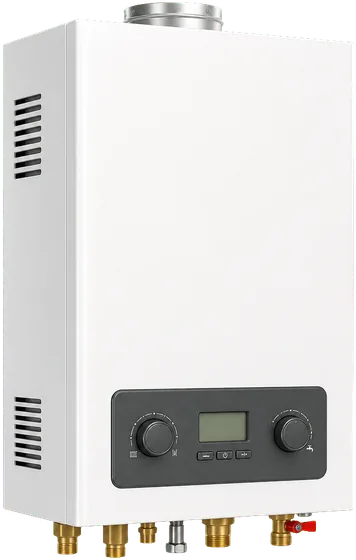
A click of ignition, a short tongue of flame in the window, and a few seconds later silence and a lockout. Reset does the same thing again. This is your own gas boiler in a house or in a new flat where it hangs on its own. An ordinary flat on a city riser is not built this way. There is no burner there to reset with a button. The boiler manages to open the gas and to make a spark. Then flame supervision does not confirm that the fire is staying, and the valve closes again. The causes differ: an electrode in soot, little gas at the inlet in the evening, a coaxial pipe pulling its own flue gas back in, or a board that really is not seeing the signal. Which icon lights is the brand's choice. Baxi, Vaillant, and Ariston draw this failure differently. There is no one number for all three. Heating boiler repair starts from 200 000 sum. The exact price comes after diagnostics, once the electrode, the inlet gas, and the flue have been separated. Twenty resets in a row do not heal the board. If you smell gas, do not press reset at all.