
The coffee tastes bitter: scale, milk and the grind
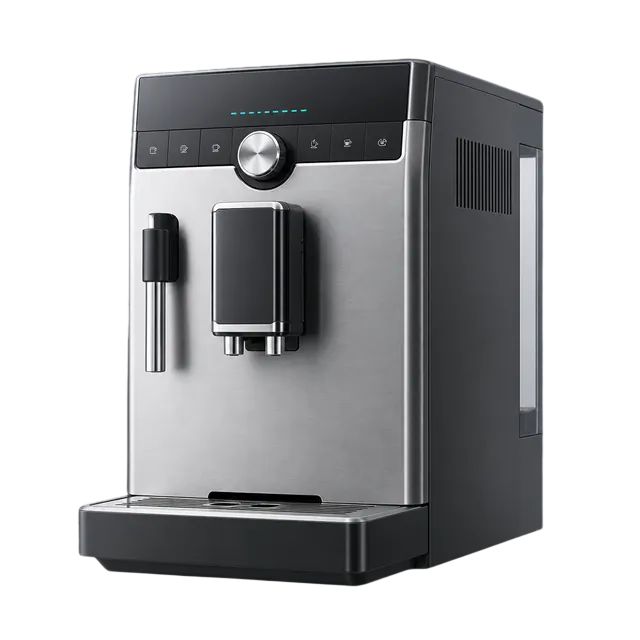
The beans did not change, and the cup suddenly tastes of aspirin: a dry bite the milk will not cover. In Tashkent that is usually hard water, a grind set too fine, or a circuit that has not been washed properly for a long time. The roast did not rewrite itself overnight.
These are the five places we actually open on a visit. Coffee machine repair starts from 200 000 sum. The exact figure comes after diagnostics, before any parts are changed. If a clean also stopped the water, read the paired note: the machine will not pour.
The same beans suddenly taste of aspirin
The bag is the same and the roast is the same, yet the espresso is flat, bitter and metallic at the finish. It is easy to blame the shop. A roast does not change overnight. The water path does. Scale in the thermoblock narrows the channel, the flow arrives in bursts, and the puck is wetted in patches. Bitter fractions that a steady pour would have left in the cake end up in the cup.
Tashkent tap water lays limescale down quickly wherever the water is hot. Scale holds heat worse than bare metal, so the temperature in the extraction zone wanders, and beans you know start to bite the tongue. If the bitterness arrived together with a thinner stream and a longer pour, this is hydraulics. A fresh bag on the same circuit will taste the same.
The check is short. Brew the same bag on another machine, or at least through a clean portafilter and a washed group. If that cup is fine and the home machine is not, we look inside yours: thermoblock, shower screen, the channel after the valve. Buying new beans while the circuit is scaled is just throwing coffee away. We do not promise a wash will restore the taste until we have seen how far the channel has closed.
Hard water and a descale that makes things worse
Hard water in Tashkent is the normal case, not a rare one. Calcium settles in the thermoblock, the boiler, on valve seats and in the thin channels after the pump. While the layer is thin the machine simply pours more slowly and tastes more bitter. Once the crust is thick it holds as a sheet. A descale tablet lifts that sheet in chunks. It does not turn it into harmless dust.
A piece the size of a grain of rice will sit in a valve seat or stop the flow-meter impeller. The symptom after a wash that was supposed to help is familiar: the pump hums, the cup stays empty or gets two drops, and sometimes the machine aborts the cycle. The tablet is not a bad chemical. It was asked to break off, in one cycle, a deposit that took months to grow. On a neglected machine we look first for somewhere that debris can go, and only then run a chemical. Otherwise the clean ends as a valve strip-down.
Distilled water is not a universal answer and it is not a treatment for the pump. Some machines decide the tank has water by electrical conductivity. Near zero mineral content, the sensor can decide the tank is empty: the pump runs dry or the cycle never starts. Extraction also wants a little mineral left, or the cup is flat even on a clean circuit. A filter that takes off the excess hardness without wiping the mineral out entirely is the saner path. Which filter, and whether this model needs one, we say after we see the circuit, not from someone else's chart.
The milk circuit is separate from the brew path
A bitter, sour finish often lives in the milk, not in the coffee. The milk circuit is its own tube, cappuccinatore or jug. A brew-unit wash never reaches it. Milk left overnight turns, fat sticks to the silicone, and the morning cappuccino smells of a warm cloth. Black espresso can still be fine. That split matters: if black is clean and milk drinks are not, we do not open the brew unit yet.
A short blast of steam for show does not lift milk fat. You need a cycle with a milk-system cleaner, then clean water, on the days milk is used. A tube left by a warm window is often yellow and sticky inside. Split silicone is cheaper to replace than to dose with chemical for a week while the taste returns the next morning.
If both black and milk drinks are bitter, we check both circuits. Boiler scale and sour milk add up to one chemist's aftertaste, and washing only one path leaves half the complaint in the cup. On a machine with an automatic milk spout we also check the nozzle and the steam valve. Through a scaled valve the milk gets warm cloudy water, not steam.
Burrs set to too fine a grind
A grind that is too fine gives the same bitterness as scale, with no white crust in the tank to point at. Water struggles through the dust, contact time stretches, and bitter compounds land in the cup. The stream is thin, the puck in the portafilter or brew unit is wet and sticky, and the pour takes clearly longer than it used to. On an automatic, the dial is sometimes run all the way to fine because someone wanted the coffee stronger.
Stronger and more bitter are not the same thing. One or two steps coarser often brings the sweetness back, if the burrs still have an edge. A blunt burr, ceramic or steel, makes dust and large chips at the same time. Water finds a path through the chips, the dust is over-extracted, and the cup is bitter and watery together. Going finer still does not fix that. It only chokes the chamber.
Do not turn the grind dial while the burrs are spinning. They can lock. We look at wear, play, and whether something in the hopper has already rounded the edge. If the edge is gone, adjustment only hides the taste until the next kilogram of beans. We change burrs when the grind shows they are finished, not as a bundle with a chemical wash.
The group head and its gasket
On a portafilter machine the bitterness often sits in the group, not in the bag. The shower screen is loaded with coffee oils, water hits one spot on the puck, and the edges of the cake stay dry. That is channelling: the middle is over-extracted and bitter, the edges are sour. Together they taste of medicine, with normal beans and ordinary water in the tank.
The group gasket hardens with heat. The portafilter starts to rock, water sneaks past the puck along the rim, and pressure in the group falls. The espresso goes pale and bitter, and there is a puddle under the handle. Pushing the handle harder is not a repair. It bends the basket ears and finishes the rubber. Gasket and screen are wear parts, and they are visible without opening the boiler. We clean the oils off the screen instead of hiding them with a finer grind.
If the bitterness remains after a clean screen, a live gasket and a sensible grind, we go into the boiler and the three-way valve. The same path covers a descale that was already run and left the stream worse: a chunk of scale may be sitting in the valve. That is no longer a taste problem. It is supply. From there the logic is the one in the machine will not pour.
Bottom line
Bitterness from the same beans is almost always water, grind and a dirty circuit, not a bad batch. Tashkent's hard water grows a crust, a tablet can break a chunk off it and park that chunk in a valve, and distilled water replaces neither a filter nor a working pump.
Coffee machine repair at ProServices starts from 200 000 sum. We name the exact price after diagnostics, before anything is replaced. Tell us the model and whether the black coffee, the milk drink, or both taste wrong.
Questions
Common questions
01Why do the same beans suddenly taste of aspirin?
02Will distilled water protect the pump?
03Can a descale make the machine worse?
04What does it cost if the coffee is bitter?
The coffee machine will not pour: the pump hums, the cup is empty
The pump hums, the cycle seems to run, and the cup stays dry. That is not one fault. On some machines the tank valve is still shut because the tank never sat on its magnet. On others a tablet or a chunk of scale is in the brew unit. On others the flow-meter impeller is still, and the board itself cuts the supply. Below is how we separate those on site, without changing the pump on a guess. Coffee machine repair starts from 200 000 sum. The exact figure is after diagnostics, before any work. If the water comes back and the cup tastes of aspirin, that is the other note: bitter taste and scale.

The boiler lights and goes out
A click of ignition, a short tongue of flame in the window, and a few seconds later silence and a lockout. Reset does the same thing again. This is your own gas boiler in a house or in a new flat where it hangs on its own. An ordinary flat on a city riser is not built this way. There is no burner there to reset with a button. The boiler manages to open the gas and to make a spark. Then flame supervision does not confirm that the fire is staying, and the valve closes again. The causes differ: an electrode in soot, little gas at the inlet in the evening, a coaxial pipe pulling its own flue gas back in, or a board that really is not seeing the signal. Which icon lights is the brand's choice. Baxi, Vaillant, and Ariston draw this failure differently. There is no one number for all three. Heating boiler repair starts from 200 000 sum. The exact price comes after diagnostics, once the electrode, the inlet gas, and the flue have been separated. Twenty resets in a row do not heal the board. If you smell gas, do not press reset at all.