
The water heater is leaking from the bottom
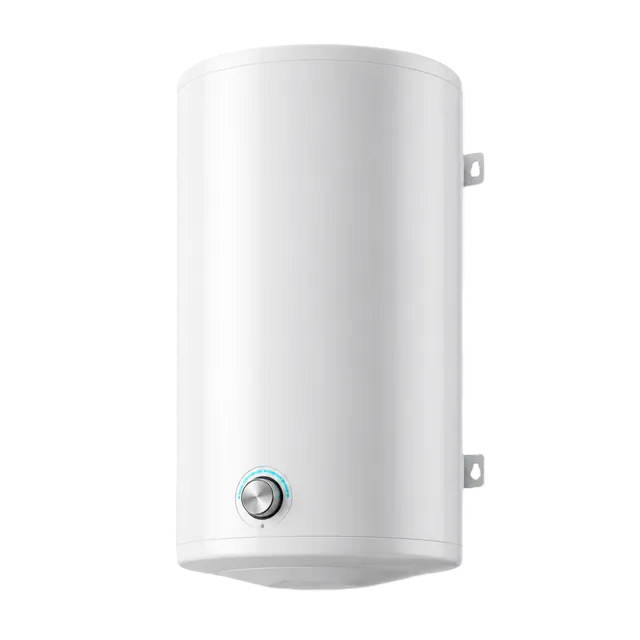
There is a puddle under the storage water heater, and the first thought is to tighten the valve so it "closes". The valve is not built for that. It is not a tap. It is the safety valve on the cold pipe: as the heater runs, it lets surplus water out, because water in a closed tank expands. Plugging it, taping the spout, or fitting a stopper is not allowed. The expansion then has nowhere to go, and the pressure stays in the tank.
This is a water heater with a tank and an element, not a heating boiler. There is no radiator circuit here. A puddle from a boiler and a puddle from a storage heater are repaired differently. First find where it is wet: the valve spout, the element flange, or the seam of the case.
Water heater repair starts from 150,000 sum. The exact price comes when the leak is located, not from a photo of water on the tiles.
A puddle and the urge to tighten the valve
Dry the floor and hold a tissue in three places: the valve spout, the bottom of the flange where the element comes out, and the tank case along the seam. The tissue shows the source better than a general stain on the tile. Until that is done, "the heater is leaking" is three different faults.
The valve is not tightened hard and it is not plugged. The thread holds the valve body on the pipe. It does not "shut the water off". Overtightening can ruin the seat, and the valve stops opening at the moment the tank needs to shed pressure. A stopper in the spout does the same thing at once. That is not how a tank is repaired.
If water is already running onto the floor and reaching the wires, switch off the breaker for this heater and close the tap on the cold pipe before the tank. That tap is the shutoff. The valve is not. A closed cold inlet stops the refill. A plugged valve only stops the relief, while filling and heating can remain.
Until the visit, do not turn the tank on again "to see if it passed" if water has been near the electrics. A short shower with a dry floor is a different story: the heater runs cold fast.
A drip while heating is the valve doing its job
Water in a closed tank grows in volume as it heats. The surplus leaves through the safety valve as drops, or as a thin trickle, for as long as it is heating. When the temperature is reached and the element switches off, the dripping usually stops. The spout should point into a tube led to a drain or a container, not onto the case and not onto a socket.
No tube — the drops run down the valve body and look like a tank leak. Fit a drain line. The spout stays open. Taping it, pushing a stopper in, or pinching it with pliers "so it stops dripping" is exactly what is forbidden. Dripping while heating is not a fault. It is the valve doing its job.
It drips harder if the temperature is turned to the stop: the expansion is greater. A shower does not need the scale at its limit. Lowering the temperature is a normal step. Plugging the valve so you do not have to buy a tube is not.
If the drops are only during the hours of heating, and the floor under the tank is dry when it is hot and no longer heating, the valve is not rushed into replacement. It is replaced when it no longer holds: a stream, not a drip, or water that runs from a cold tank.
A steady stream is no longer normal
A stream from the spout the whole time the tank is heating, or water from the valve when it is cold and the element is silent, is not expansion "as in the instructions". The valve spring has sat down, the seat does not hold, or the pressure in the cold riser is high on its own and the valve stays open. The valve is then replaced. It is not stopped up for a week "until the technician arrives".
A week with a stopper is a week with no relief. Night heating raises the pressure in a closed volume. How that ends for a tank is better not tested on your own case. If the stream is in the way, close the cold feed tap and take the heat off at the breaker. The water in the tank will cool, new water will not fill in, and the valve stays free.
Also look whether it is leaking past the spout, from under the nut of the valve itself. A wet thread is a gasket or a cracked valve body, not "it is supposed to drip". That is a valve replacement too, not extra tape on top of a stream.
Water heater repair starts from 150,000 sum. A valve and a tank do not cost the same in the estimate. Until it is clear whether this is the spout or the seam, we do not name one figure.
Tank seam and the flange
The flange is the cover the element comes out through. Water from under it, in a ring, is often the gasket: dried out, cocked, or tightened on one side. The gasket is replaced, the face is looked at. That is a repair, and the tank is alive. Tightening the flange "a bit more" on the old rubber usually does not hold, and it can pull the seat out of true.
Water from the case seam, from under the plastic shell, from a point on the side of the tank — that is the inner tank. The enamel or the seam has let go, often after years without an anode: the rust had nowhere to go but the steel. That tank is not welded in the flat and not smeared with sealant on the outside. Sealant on the shell does not hold pressure. The honest conclusion here is to replace the heater, not to "patch it for a season".
We say that when the dry and the wet have been separated with a tissue, not from a puddle at the bottom. A puddle at the bottom also comes from a spout with no drain line: water runs down the pipe and collects under the tank, while the seam is dry. Until the seam is looked at, we do not condemn the tank.
The anode here is maintenance, not a scare. In hard water it is checked every couple of years, when the flange is open anyway. An eaten one is replaced. That does not heal a seam that has already opened, but the next tank without a rod will walk the same road.
Check valve on the cold pipe
The check valve and the safety valve are different parts. They are often fitted next to each other on the cold pipe. The check valve stops heated water being pushed back into the riser. Without it the kitchen cold tap can run warm, and the neighbours get someone else's heat. The safety valve, at that moment, still has to be able to drip. One does not replace the other.
Someone fits a check valve, and the safety valve starts dripping more noticeably. That happens: before, part of the expansion went back up the riser, and now the valve is the only way out. A drip while heating after a check valve is fitted is not a reason to remove the safety valve or to plug it "because it did not drip before". A tube on the spout is exactly what this layout needs.
A check valve stuck shut stops the tank filling. That is not a leak from the bottom. That is an empty tank and a dry element, if heating was switched on with no water. Do not mix it up with a wet seam. A check valve that does not hold is fixed by replacing the check valve. The safety valve stays in place, with an open spout.
The exact price comes after diagnostics. Work starts from 150,000 sum. If the bottom is dry and the shower runs out in four minutes, the leak is not the cause: the heater runs cold fast.
Bottom line
A drip from the spout while the tank heats means the valve is working. It is left alone and it is not plugged. A stream, water from a cold tank, a wet seam — that is a repair or a new heater. A flange with a gasket is often still alive. A seam on the case is not.
Shut the tap on the cold pipe, not the valve. Water heater repair starts from 150,000 sum, exact figure once it is clear where the water comes from. A short shower with no puddle is a different fault: the heater runs cold fast.
Questions
Common questions
01Can I tighten the valve so it stops dripping?
02It drips from the tube while heating. Is that a leak?
03The stream will not stop. Can I plug the valve until the technician comes?
04How is a check valve different from the safety valve?
The water heater runs cold after four minutes
Four minutes of decent water, then cold at once. The tank still hums and the heat lamp is on. This is a storage water heater: a closed vessel with an element, and you draw water that is already hot. It is not a heating boiler. It does not feed the radiators, and it is not repaired like one, with a heating pump and a heating expansion vessel. A short run means one of two things. Either the hot layer in the tank is small: the element is in a coat of scale, the tank is full of sediment. Or cold water from the inlet is mixing the layers and reaching the top. A voltage stabilizer has nothing to do with it. A sag makes heating slow. It does not empty a ready tank in four minutes. Water heater repair starts from 150,000 sum. The exact price comes after the tube, the element, and the anode are visible, not from the phrase "it goes cold fast".
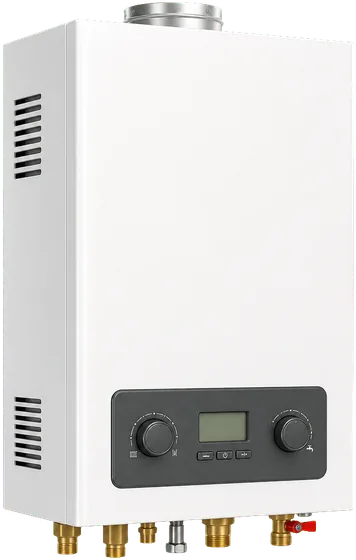
The boiler lights and goes out
A click of ignition, a short tongue of flame in the window, and a few seconds later silence and a lockout. Reset does the same thing again. This is your own gas boiler in a house or in a new flat where it hangs on its own. An ordinary flat on a city riser is not built this way. There is no burner there to reset with a button. The boiler manages to open the gas and to make a spark. Then flame supervision does not confirm that the fire is staying, and the valve closes again. The causes differ: an electrode in soot, little gas at the inlet in the evening, a coaxial pipe pulling its own flue gas back in, or a board that really is not seeing the signal. Which icon lights is the brand's choice. Baxi, Vaillant, and Ariston draw this failure differently. There is no one number for all three. Heating boiler repair starts from 200 000 sum. The exact price comes after diagnostics, once the electrode, the inlet gas, and the flue have been separated. Twenty resets in a row do not heal the board. If you smell gas, do not press reset at all.