
The water heater runs cold after four minutes
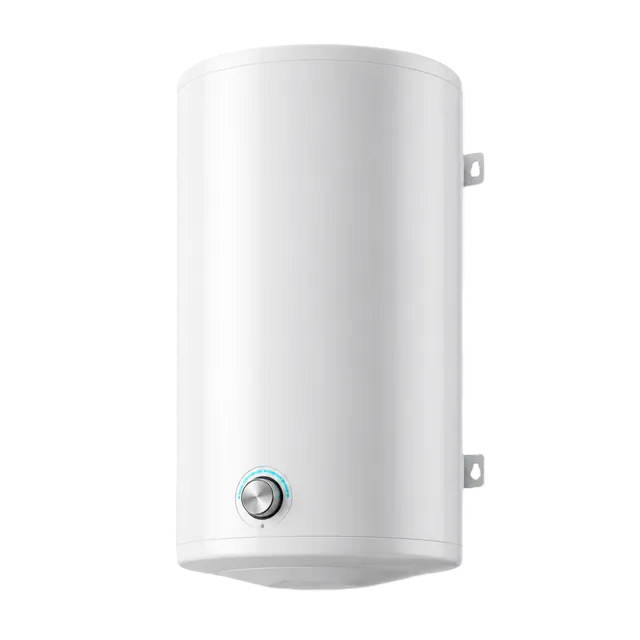
Four minutes of decent water, then cold at once. The tank still hums and the heat lamp is on. This is a storage water heater: a closed vessel with an element, and you draw water that is already hot. It is not a heating boiler. It does not feed the radiators, and it is not repaired like one, with a heating pump and a heating expansion vessel.
A short run means one of two things. Either the hot layer in the tank is small: the element is in a coat of scale, the tank is full of sediment. Or cold water from the inlet is mixing the layers and reaching the top. A voltage stabilizer has nothing to do with it. A sag makes heating slow. It does not empty a ready tank in four minutes.
Water heater repair starts from 150,000 sum. The exact price comes after the tube, the element, and the anode are visible, not from the phrase "it goes cold fast".
Four minutes of warm water, then cold again
A healthy storage tank keeps hot water on top and takes cold water at the bottom. The draw is from the top. Until the layer runs out, the shower stays even, then it falls. It does not cut off in the second minute unless the tank is tiny. Four minutes and a sharp cold means either there was little hot water, or cold water is already mixed in.
This is not air in the radiators and not the three-way valve of a boiler. There is no heating exchanger here. If the flat has both a boiler and a storage heater, do not mix them up by the puddle or the bill. The water heater has one job: heat the water in its own tank.
An evening voltage sag in the building stretches the hour of heating. It does not cancel seventy degrees that were already stored, during one shower. If the tank is large and the warm water only covers washing hands, the problem is the layers or an element that never heated the water. A stabilizer makes sense when heating truly does not finish in an hour and the lamp barely pulls. It does not explain four minutes.
Separate the other story at the same time: drops from the safety-valve spout while it heats. That is not "the tank went cold". The valve is allowed to drip as water expands, and it must not be plugged. Leaking from the bottom is a different note: water heater leaking from the bottom.
Anode eaten by hard water
A magnesium rod hangs inside the tank. Tashkent's hard water eats the rod instead of the tank steel. About every couple of years, when the heater is opened anyway because of scale, the rod is looked at. Thick — it stays. Worn down to a wire, or only the pin left — a new one goes in. It is a consumable, not a verdict and not "the tank bursts tomorrow".
While the anode is in place, rust goes into it. When it is gone, rust goes into the seam and the flange, and loose sediment builds on the bottom. That sediment is what eats the useful litres: the nameplate says eighty, the hot layer left is a short shower. So the anode and the clean are not split into two visits for the sake of a tick.
Do not drain the tank and pull the flange yourself on a live heater. The element and the anode are looked at when this heater's breaker is off, the water is shut, and the tank is empty. That is work on site, not a suggestion to take a wet, switched-on unit apart in the evening. At diagnostics we say whether the rod is alive or already gone, and we change it only if it is eaten.
Hard water is not cured by one anode forever. A couple of years later it is looked at again at the next clean. We will not scare you with "every six months or it is an accident". If the rod is still doing its job, it stays.
Heating element in a coat of scale
The element is the tube that heats the water. Scale sits on it as a coat. The coat keeps the heat: the tube overheats, the water around it is barely warm, and the thermostat clicks off before the tank is hot. From the shower that is the same four minutes. The tank can sound like a kettle full of stone.
The coat is not knocked off with a screwdriver against the enamel. The enamel is what keeps the tank from rusting. A chip in it is worse than the scale. The element comes out, the stone comes off, or the tube is replaced if it has already boiled through and is leaking to the case. Loose sediment on the bottom is rinsed at the same time, not left "until next time": it brings the short shower straight back.
An element that trips the breaker is a different picture, not "goes cold fast". That is a leak to the case or an open circuit. It is not switched on again if the breaker or the RCD drops at once. For a short hot run the breaker holds: it is heating, just not the water.
Water heater repair starts from 150,000 sum. Element replacement and a clean are priced after the flange is open and it is clear whether this is a coat or a tube that is already dead. Before it is open, an element price is a guess from the model, not an estimate.
A broken tube that mixes the layers
Cold water should enter at the bottom through an internal tube. Hot water stays on top and does not mix. The tube is plastic. Heat and age snap it off at the flange, or it goes missing. Then a jet of cold water hits the hot layer directly. The shower is warm for three or four minutes and turns cold, even though the element is fine and the tank is not small in litres.
You see it when the flange is off: the tube is in place, a broken piece is in the tank, or there is a hole with no tube. The replacement is the tube for this model, not "about that length". A short tube mixes the layers almost like a broken one.
The layers also get confused with the check valve, and that is a different part. The check valve sits outside on the cold pipe and stops hot water being pushed back into the riser. The internal tube sits in the tank and keeps the cold water down. Changing the valve instead of the tube does not lengthen the shower. Plugging the safety valve so that "pressure holds the heat" is not allowed: heat is not held that way, and the expanding water has nowhere to go.
If the kitchen cold tap runs warm by itself, hot water is leaving into the riser. Then the outside check valve is the part to look at. If the cold tap is cold and the shower is short, it is more often the internal tube or the coat, not the riser.
Tank size for a family of three
Fifty litres for three people, if everyone showers one after another in the evening, runs out even on a healthy tank. The hot layer simply ends, and the third person gets cold. That is volume, not a fault. Eighty litres gives a margin for that order of showers. A hundred litres if the gaps between people are short and the draw is a full one.
Four minutes from eighty litres is no longer explained by volume. A healthy tank of that size does not die on washing hands. There the tube, the coat, or sediment has eaten half the tank. That comes first, and only then a talk about a larger tank. Replacing a fifty-litre unit with a bigger one makes sense when the repair showed a live element and an intact tube, and there is still not enough water for three people in the evening.
A small tank is not "fixed" by turning the temperature to the stop. Higher temperature means more scale, and the safety valve drips more often, because the water expands more. A drip while heating is the valve doing its job. The spout is not plugged. Leave the working temperature high enough for a shower, not at the end of the scale "so it lasts".
The exact repair price comes after diagnostics. Work starts from 150,000 sum. If there is already a puddle underneath, not just a short shower, that is the neighbouring fault: water heater leaking from the bottom.
Bottom line
Four minutes of water is the layer, a coated element, or a broken inlet tube, not a heating boiler. In hard water the anode is looked at every couple of years when the tank is open: a thick one stays, an eaten one is replaced. For three people the litres are checked too, but a large tank does not replace a dead tube.
Water heater repair starts from 150,000 sum, exact figure after the flange is open. The safety valve is not plugged. If water is already running from the bottom, rather than running out in the shower, read water heater leaking from the bottom.
Questions
Common questions
01Why does the hot water last only four minutes?
02Does the anode have to be changed urgently?
03I fitted a stabilizer and the water still runs out fast. Why?
04Is a 50-litre tank enough for three people?
The water heater is leaking from the bottom
There is a puddle under the storage water heater, and the first thought is to tighten the valve so it "closes". The valve is not built for that. It is not a tap. It is the safety valve on the cold pipe: as the heater runs, it lets surplus water out, because water in a closed tank expands. Plugging it, taping the spout, or fitting a stopper is not allowed. The expansion then has nowhere to go, and the pressure stays in the tank. This is a water heater with a tank and an element, not a heating boiler. There is no radiator circuit here. A puddle from a boiler and a puddle from a storage heater are repaired differently. First find where it is wet: the valve spout, the element flange, or the seam of the case. Water heater repair starts from 150,000 sum. The exact price comes when the leak is located, not from a photo of water on the tiles.
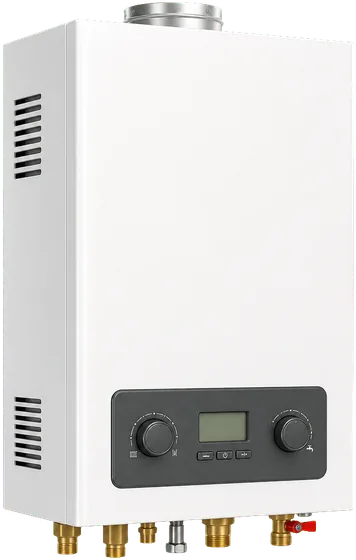
The boiler lights and goes out
A click of ignition, a short tongue of flame in the window, and a few seconds later silence and a lockout. Reset does the same thing again. This is your own gas boiler in a house or in a new flat where it hangs on its own. An ordinary flat on a city riser is not built this way. There is no burner there to reset with a button. The boiler manages to open the gas and to make a spark. Then flame supervision does not confirm that the fire is staying, and the valve closes again. The causes differ: an electrode in soot, little gas at the inlet in the evening, a coaxial pipe pulling its own flue gas back in, or a board that really is not seeing the signal. Which icon lights is the brand's choice. Baxi, Vaillant, and Ariston draw this failure differently. There is no one number for all three. Heating boiler repair starts from 200 000 sum. The exact price comes after diagnostics, once the electrode, the inlet gas, and the flue have been separated. Twenty resets in a row do not heal the board. If you smell gas, do not press reset at all.