
The vacuum barely picks up, and the motor got louder
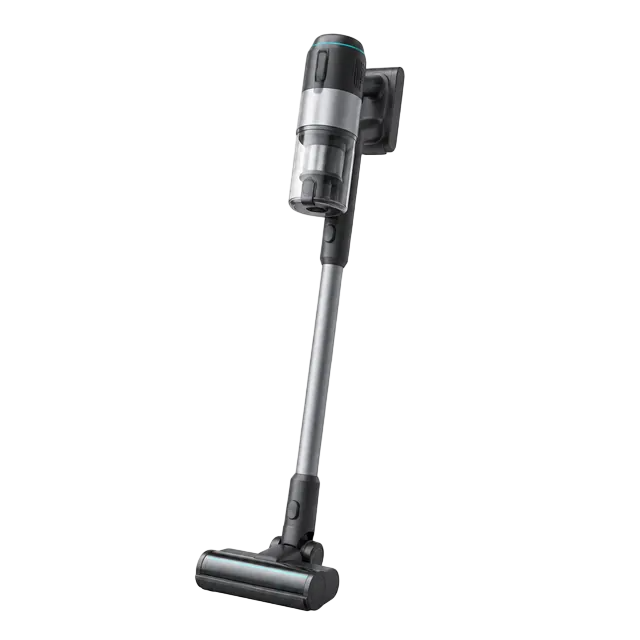
The motor howls higher than usual, and the track on the carpet is the same as before you started. Loud is not suction. When the air has nowhere to go, the motor spins more freely and screams, and there is no pull at the brush. Look first for where the air escaped or stopped: bag, filter, cyclone, hose, brush. The motor goes at the end of that list, not the start.
After work in the flat, plaster dust fills a filter in one clean. Dust in the niches of Tashkent flats is fine and there is a lot of it. That is not, by itself, "the motor grew weak with age".
Vacuum repair starts from 100,000 sum. The exact price comes when it is clear whether this is the filter, the hose, or already the motor. Do not open the motor housing at home, and not with the plug in the wall.
The motor screams louder, the carpet looks the same
On a healthy vacuum the sound changes if you cover the hose end with a palm: the motor works harder or, on many models, the speed climbs and the howl gets thinner. A weak clean with a thin howl is the same picture, except the "palm" is inside: a filter, a clump of dust, a kink. The carpet is not the point until air actually reaches the brush.
Check from the end. Take the hose off and put a palm on the opening in the body. The palm is pulled on hard — the body is alive, and the hose, wand, or brush is next. The palm barely feels a pull, and the filter was just shaken out and dried — then it is the body: a seal, the fan, or the motor. While the filter is dirty, the motor is not condemned.
A burning smell and sparks in the gaps of the housing are a reason to pull the plug and not "blow the vacuum through" by pinching the hose. Sparks are not fixed by a second pass over the carpet. Do not take the motor cover off at home. The motor brushes and the capacitor are a technician's job, with the machine unplugged, not taken apart on the carpet while it is powered.
A robot that circles by the sofa and reports the job done is a different machine and a different fault: the robot vacuum goes in circles. Its weak clean is not fixed with a canister bag.
Bag, HEPA, and wet dust in the cyclone
A full bag does not "still have a bit of room". The paper is tight, air hardly passes, the motor screams. The bag is replaced, not shaken out until it has holes: a hole blows dust back into the turbine. A cyclone bin filled to the window does the same. Wash it and dry it before assembly. Do not fit it wet.
A HEPA that was washed and put straight back while damp collapses. Suction drops, and dust can pass the wet paper into the motor. The filter goes in only dry. Do not dry it with the vacuum by running the motor "to warm it": wet dust bakes on, and the motor swallows grit. Dry it in the air, not hard against a radiator if that warps the paper.
Wet dust is its own clump. Spilled water, plaster, or wet litter from a tray. In the cyclone that is a crust. Air goes around it or does not go at all. Clean the crust out dry, and the bin after that is dry. Do not switch the vacuum on while the lump is inside. It is not a way to dry a puddle.
The foam filter in front of the motor, packed with grey dust, chokes as hard as an expensive HEPA on the outside. Look at it even if the paper filter looks clean. Both layers are one duct.
A hole in the hose at the bend
The corrugated hose usually splits where it is bent every day: at the handle, at the wand joint, at the inlet to the body. The hole is small, there is a hiss, the carpet is dead. A palm on the suspect spot changes the motor note — air is leaving here, not at the brush.
Tape for an hour confirms the guess: cover it, suction returns, so it is the hose. Tape for a month is not a hose. It lifts, dust blows into the room, the hole grows. Replace the hose, or at least the cuff, if the plastic end split and the corrugation is intact.
A wand that is not pushed in until it clicks whistles the same way. Push it home. A crack along the rigid wand at the tool lock is the same leak. A stronger motor will not "cure" it. While the hole is there, a new motor will howl into the same hole.
The hose check is done with the vacuum running, palm on the outside. You do not cut the corrugation, pull the joint apart with the plug in, or shine a light into the motor for this. Found the hiss — switch off, and from there it is a replacement, not a knife at the bend.
Hair on the brush and a belt smell
The brush on the floor should turn. If it does not, and the body still pulls, hair is wound on the axle, or the belt has jumped or worn. The smell of hot rubber is the belt slipping on a roller that is not moving. The motor in that case is often alive: it spins the belt unloaded and heats it.
Unplug the vacuum. Cut the hair off the axle with scissors, without chopping the belt itself if it is still whole. A belt that is glassy, cracked, and smells is replaced. After that the brush should turn by hand, without grit in the bearing. Grit and thread in the bearing will eat a new belt within a week.
Do not switch the brush on "so it throws the hair off itself". The belt burns through, and the roller heats the carpet. A turbo brush with its own small motor, which squeals and does not turn, is no longer the canister belt. It is that motor, or the wire in the wand. That shows up after the hair is off and the brush is still dead.
The main motor housing stays closed for this check. The plug is out while your hands are at the axle. That is enough not to mistake a packed brush for a dead motor.
When the motor itself is at fault
The motor is blamed when the air path is clear and there is still no pull. Hose off, bag or cyclone empty and dry, both filters dry, a palm on the body inlet does not hold, and the gaps smell burnt or show sparks. Then it is the motor brushes, the bearing, or the winding. Brushes can sometimes still be replaced. A winding that smells of varnish is usually a motor replacement, not "clean it and carry on".
Until that picture, the motor is not ordered. Otherwise you pay for a motor and the carpet is still being cleaned by a hole in the hose. On a visit the order is the same as the palm test at home, only with a measurement, not by ear.
Vacuum repair starts from 100,000 sum. A motor replacement is a separate estimate after the model is open and the filters are ruled out. The exact figure is not named before that. If the vacuum also heats up and switches itself off after a few minutes, that is protection from blocked air, or a motor that is already tired: filter first, winding second.
A robot with a dead battery at minute twelve does not belong here. It has no hose like this. Its circles are sensors and a map: the robot vacuum goes in circles.
Bottom line
A loud motor and a dead carpet almost always start with air: bag, filter, cyclone, a hole at the bend, hair on the brush. The motor comes when the body inlet already has no pull. Pull the plug before the scissors, and do not open the motor at home.
Vacuum repair starts from 100,000 sum, exact price after diagnostics. A robot circling by the sofa is not this hose: the robot vacuum goes in circles.
Questions
Common questions
01Why is the motor louder while it picks up less?
02Can I put a HEPA back as soon as it is washed?
03The hose hisses by the handle. Tape it for good?
04When is it definitely the motor, and what does it cost?
The robot vacuum circles by the sofa and says it is done
The robot spends an hour drawing circles around a sofa leg, returns to the dock, and the app says cleaned. The report means the program ended. The floor may not have been touched. A circle is not a personality and not "how it explores the flat". It has hit something it treats as a drop, a wall, or the end of the charge. Do not put the body under a tap and do not pour water over the top. Water gets into the lidar and onto the board. Wipe the sensors with a dry or barely damp cloth, with the robot off the dock and switched off. A removable water tank, if there is one, is washed away from the body. Vacuum repair starts from 100,000 sum. The exact price comes after dust on the sensors, the carpet, the map, and the battery have been separated. A normal vacuum with weak suction is a different machine: the vacuum barely picks up.
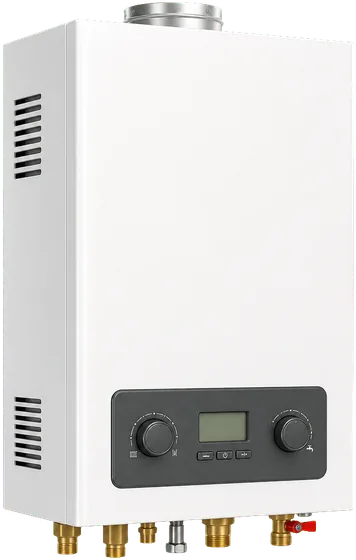
The boiler lights and goes out
A click of ignition, a short tongue of flame in the window, and a few seconds later silence and a lockout. Reset does the same thing again. This is your own gas boiler in a house or in a new flat where it hangs on its own. An ordinary flat on a city riser is not built this way. There is no burner there to reset with a button. The boiler manages to open the gas and to make a spark. Then flame supervision does not confirm that the fire is staying, and the valve closes again. The causes differ: an electrode in soot, little gas at the inlet in the evening, a coaxial pipe pulling its own flue gas back in, or a board that really is not seeing the signal. Which icon lights is the brand's choice. Baxi, Vaillant, and Ariston draw this failure differently. There is no one number for all three. Heating boiler repair starts from 200 000 sum. The exact price comes after diagnostics, once the electrode, the inlet gas, and the flue have been separated. Twenty resets in a row do not heal the board. If you smell gas, do not press reset at all.