
The boiler lost pressure
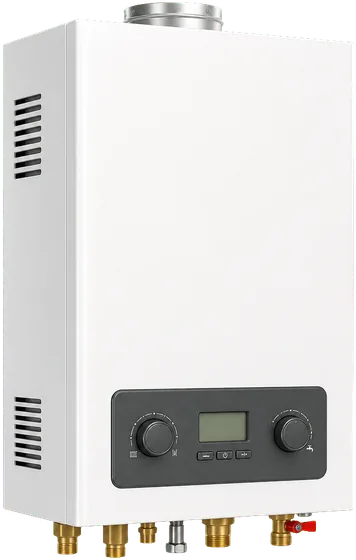
In the morning the radiators are cold and the gauge needle is on zero. This is the circuit of your own boiler: a private house, or a newer flat where the boiler hangs in the kitchen, the plant room, or on the balcony. An ordinary Soviet-plan flat on city risers is not this case. There is no such gauge there, and a cold riser is a building question, not a valve on a Baxi.
The sealed circuit lost water overnight, or it gave water away through the relief valve as it cooled. At zero many boilers will not fire, the pump churns air, and the radiators stay cold. What pressure is normal is printed on this gauge and in the manual of this model. There is no single number for every house. Storeys and vessels differ.
Heating boiler repair in Tashkent starts from 200 000 sum. The exact price comes after diagnostics. We see Baxi, Vaillant, and Ariston often, and each brand draws the icon its own way. A code from someone else's forum does not belong on your needle. Topping up every morning is not the cure.
In the morning the radiators are cold and the needle is at zero
In the evening the circuit was in its range. In the morning the needle is on the stop, the radiators are cold, gas is still in the house, and the boiler display is lit. That is a system that gave water away over a day and then cooled. While the needle is at zero, many boilers will not allow a flame, or the pump spins emptiness. The radiators are cold because there is nothing to fill the pipes, not because it is winter.
Look at the boiler gauge, the one on the front panel or under the housing. A city riser in an old flat does not have this gauge. If there is no boiler in the flat, there is no point turning radiator valves in search of a fill point. That is someone else's circuit. In a house, and in some new flats, the circuit is your own and closed, and zero on the needle is its loss, not the plant in the yard switching off.
The display at that moment may show an icon, or nothing except cold radiators. Baxi, Vaillant, and Ariston draw a loss of pressure differently. We do not keep one number that means zero on all three. Diagnostics gets the brand, the model, and what you can see: needle at zero, the icon if there is one, and whether the radiators were warm the evening before. A boiler that lights and goes out can still be holding pressure. This complaint starts with the needle.
The fill valve is not the cure
The fill valve joins the mains to the heating circuit. It is used after a drain or a repair, when the circuit needs to be filled once to the mark on this gauge or the figure in this model's manual. Then the valve is closed fully. Opened every morning, it does not cure anything. It adds fresh water to a hole, or to a vessel that no longer holds air. Oxygen and scale from those top-ups settle in the heat exchanger. By evening the needle has crept down again, and it starts to look like this boiler just behaves that way.
The valve must not be left cracked open so it will hold itself. On heat the water expands. A cracked fill plus a dead vessel drives the needle above the working range, and the relief valve dumps the excess on the floor or into a bottle under the boiler. By morning the needle is at zero again, because nobody put the dumped water back. The loop closes: topped up in the morning, spat out by the valve in the day, zero again next morning.
If you smell gas, the fill valve is irrelevant. Do not turn it instead of shutting the gas and airing the room. If the relief pipe is already running, a new top-up only grows the puddle. One careful fill to this boiler's own mark, the tap closed, and a day of watching, tells you whether the loss was once. The needle back at zero the next morning means: stop topping up and look for a leak or the vessel. Boiler work starts from 200 000 sum. The exact price comes when we can see what is dumping or passing water.
The expansion vessel and its air nipple
The expansion vessel is a round tank, often red or white, behind the boiler or on the wall beside it. A diaphragm sits inside. Heating water on one side, air on the other. The air is what accepts the expansion when the burner heats the radiators. The nipple on the air side looks like a car valve. While the diaphragm is intact, the needle sits in its range when cold and rises a little when hot, not as far as the relief valve.
A torn diaphragm lets water into the air side. The vessel becomes heavy and useless. When the burner starts, the needle jumps, the relief valve dumps, and by morning, after cooling, the needle is at zero. From outside the boiler seems to drink water. In fact the valve is spitting it out, because there is nowhere for expansion to go. Water, not air, may come from the nipple. That is a dead diaphragm. The vessel is replaced, or the diaphragm is, if that model allows it. We do not tell you to pump the nipple with the circuit full and without this model's manual. It is easy to overpress the diaphragm and open the relief valve again.
A relief valve that drips is not taped and not plugged. It is what saves the heat exchanger and the hoses when pressure has climbed. A taped valve turns a morning zero into a blown hose, or into a puddle from a joint that was never meant for that spike. A drip from the valve pipe while the needle jumps is a reason to look at the vessel, not to buy a new valve so it will stop dripping and not to block the pipe. The valve is changed if it weeps at a normal, steady pressure. That is visible after the vessel holds air again, not instead of that.
A quiet leak at a radiator
The plant room is dry, there is dust under the boiler, and the needle still settles overnight. The water is not leaving under the boiler. A radiator valve gland is dripping on the second floor, an automatic air vent on the manifold, or a wet joint in the screed of a new flat. Over a day that is a cup. Over a week the needle no longer lasts until evening. A rust streak on the radiator paint, a damp cap on a bleed valve, a warm patch on the tile where the pipes should not be heating the floor: that is the circuit loss.
Walk the house with the radiators cold and with working pressure, if any pressure is left. At zero a leak can stop dripping and open again once the circuit is filled. So I looked and it was dry, said in the morning on an empty system, proves little. We look at radiator seams, union nuts, the strainer on the return, and the relief valve pipe as its own item. A puddle from that pipe is more often the vessel, or a relief valve stuck open, than a hole in a section.
In a private house the leak also hides in a warm floor. The stain on the screed shows up later than the needle falls. No stain yet does not mean the circuit is whole. Water can leave into the ground under the house slower than you can top up. That is another reason not to make the fill valve a morning habit. On diagnostics we separate the valve dumped because of the vessel from the circuit is holed. That decides whether we change the vessel or look for a wet joint. The price comes after that fork, not from a photo of a needle at zero.
If you add water every morning
The fill valve every morning, and the needle at zero every morning, is already a fault, not maintenance. Fresh water every day brings oxygen and salts. The heat exchanger scales up, the boiler starts to short-cycle and overheat a narrow passage, and overheating joins the loss of pressure. A wet spot in the screed or under a radiator becomes a floor repair in that time, not a new washer. Topping up does not keep the system. It postpones the place where the water leaves.
Stop the morning ritual. Once, bring the needle to the range of this model, close the tap fully, do not leave the handle a little bit open. Then do not top up for a day, and watch. If it falls again, do not use the boiler as a kettle you refill with breakfast. Call for diagnostics. If the needle climbs within minutes of the burner starting and the valve spits, stop the boiler. Do not plug the valve, and do not pump the vessel on the fly while the circuit is under pressure and the diaphragm has not been checked.
A smell of gas, a wet gas joint, or a boiler that still tries to ignite in bursts while the needle is at zero, is not a reason for one more top-up. Shut the gas, air the room, and do not stack reset after reset. For a visit in Tashkent it is enough to know: a house or a new flat with its own boiler, the brand, where the needle sits morning and evening, and whether the relief pipe drips. Heating boiler repair starts from 200 000 sum. The exact price comes after diagnostics. Until the vessel and the circuit have been given their roles, we do not name one sum for pressure.
Bottom line
Zero on the gauge of your own boiler is water that left the circuit, not a city riser in an old flat. The fill valve every morning does not bring that water back for good. Either there is a leak, or the vessel no longer accepts expansion. The valve that spits because of that is not taped over.
One fill to this model's mark, and a closed tap, shows whether zero comes back. If it comes back, topping up stops. Heating boiler repair starts from 200 000 sum. The exact price comes after diagnostics. The brand and the icon on the display are needed as they are. On Baxi, Vaillant, and Ariston this is not one shared code.
Questions
Common questions
01Is this about radiators in an ordinary flat on a riser?
02Can I open the fill valve every morning?
03The relief valve drips. Can I tape the pipe?
04Is the display code the same on every boiler?
The boiler lights and goes out
A click of ignition, a short tongue of flame in the window, and a few seconds later silence and a lockout. Reset does the same thing again. This is your own gas boiler in a house or in a new flat where it hangs on its own. An ordinary flat on a city riser is not built this way. There is no burner there to reset with a button. The boiler manages to open the gas and to make a spark. Then flame supervision does not confirm that the fire is staying, and the valve closes again. The causes differ: an electrode in soot, little gas at the inlet in the evening, a coaxial pipe pulling its own flue gas back in, or a board that really is not seeing the signal. Which icon lights is the brand's choice. Baxi, Vaillant, and Ariston draw this failure differently. There is no one number for all three. Heating boiler repair starts from 200 000 sum. The exact price comes after diagnostics, once the electrode, the inlet gas, and the flue have been separated. Twenty resets in a row do not heal the board. If you smell gas, do not press reset at all.

Sound but no picture: what to check before opening the set
The news is talking, the remote changes channels, and the screen stays black. That is not a picture mode that slipped. Sound lives on the main board. Light and the image itself are further down the chain. Until it is clear where the chain broke, do not take the set apart at home, and do not leave it running if it smells of burning. From the outside there is one useful check: a flashlight close to the glass. The cover stays on. Opening the set while the plug is in the wall is not allowed. The power supply holds a charge even after the plug is out. TV repair starts from 150,000 sum. The exact price comes after diagnostics. Backlight, its supply, and a black screen that shows nothing even under a flashlight are different jobs.